Types of 3D printers: FDM, resin, SLS, MJF, PolyJet and metal compared
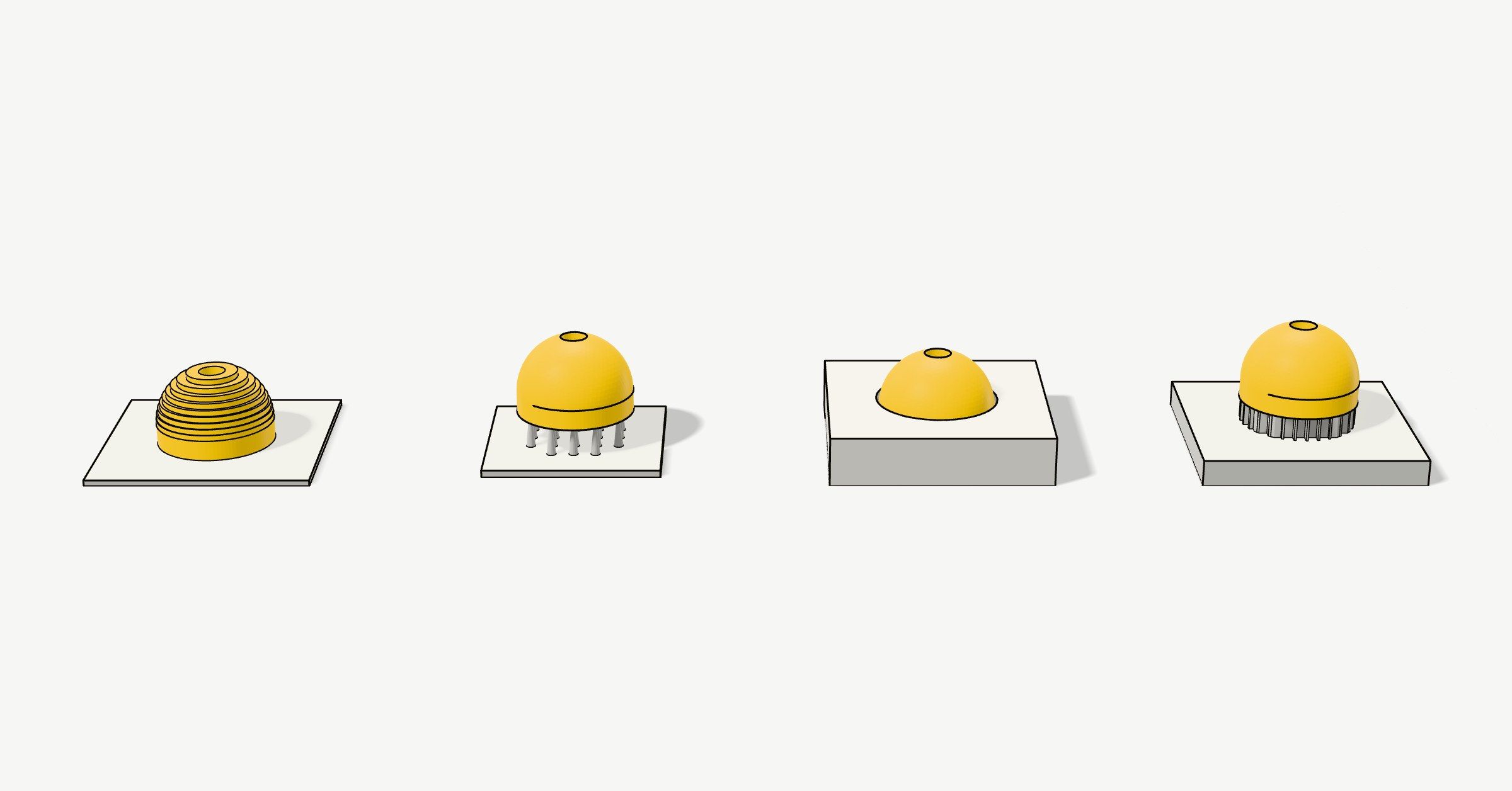
Most 3D printers melt plastic filament and lay it down one line at a time. Those are the printers on desks and in workshops: more than a million printers under $2,500 were shipped in the first three months of 2025 alone. The others cure liquid resin with light, fuse powder with a laser or a lamp, or jet droplets like an inkjet printer, and a few of them print metal. Here’s how each one works, what it’s good at, what the machines cost, and which ones a maker can own.
What's on the list
Eleven printing technologies from the seven kinds the ISO/ASTM 52900 standard names, from filament printers to metal. Each card has a drawing of how it works, what the machines cost, whether a maker would own one, its materials, and its pros and cons.
Where the facts come from
The makers' own pages, Protolabs and Protolabs Network for tolerances, and CONTEXT's shipment figures for what sells, all read on 11 November 2026. The last answer on this page links each one.
Prices
The makers' US stores on 11 November 2026, before tax. Many were running Black Friday sales, so we give the regular price and say when a sale is on. Most industrial machines are sold on quote; for those we give a published price, with its date, or say there's none.
| If you want | Use |
|---|---|
| Prototypes, brackets and everyday parts | A filament (FDM) printer |
| Fine detail: miniatures, jewellery, dental models | A resin (MSLA) printer |
| Strong nylon parts with no supports, many at once | SLS or MJF, ordered from a service |
| Models in full colour, or rigid and rubbery in one part | Material jetting (PolyJet), ordered |
| Metal parts | Laser powder bed fusion, ordered from a service |
The seven kinds of 3D printing
The standard for 3D printing words, ISO/ASTM 52900, sorts every printer into seven process categories by how it joins material. Its current edition is from 2021, and ISO reviewed and confirmed it in 2025. Here’s how it defines each one:
| Category | The standard’s definition | In this post |
|---|---|---|
| Material extrusion | Material is selectively dispensed through a nozzle or orifice | FDM, metal FDM |
| Vat photopolymerization | Liquid photopolymer in a vat is selectively cured by light-activated polymerization | MSLA, SLA, DLP |
| Powder bed fusion | Thermal energy selectively fuses regions of a powder bed | SLS, MJF, metal laser powder bed fusion |
| Material jetting | Droplets of feedstock material are selectively deposited | PolyJet, wax printers |
| Binder jetting | A liquid bonding agent is selectively deposited to join powder materials | Metal binder jetting |
| Directed energy deposition | Focused thermal energy is used to fuse materials by melting as they are being deposited | DED and wire arc |
| Sheet lamination | Sheets of material are bonded to form a part | Not covered here |
The brand names cut across these. MJF uses an inkjet head, but what joins the powder is heat, so it’s powder bed fusion. DMLS and SLM are two names for printing metal with a laser in a powder bed: Protolabs Network says they’re “more or less interchangeable for most applications”.
Every type of 3D printer
Material extrusion
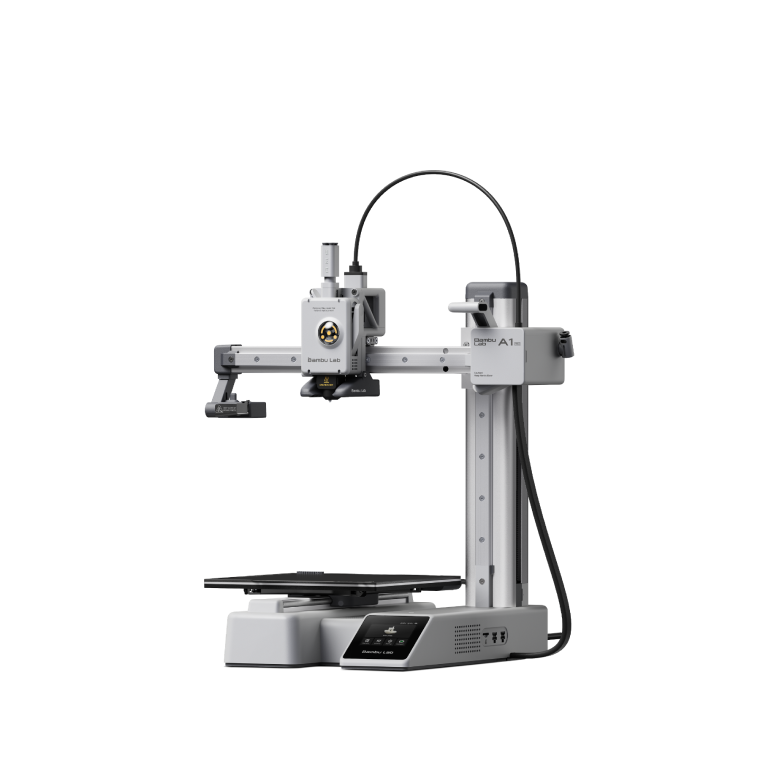
FDM
Fused deposition modelling, also called FFF
From $219Bambu Lab A1 mini, on sale for $199
Own one: yes, the printer most makers start with
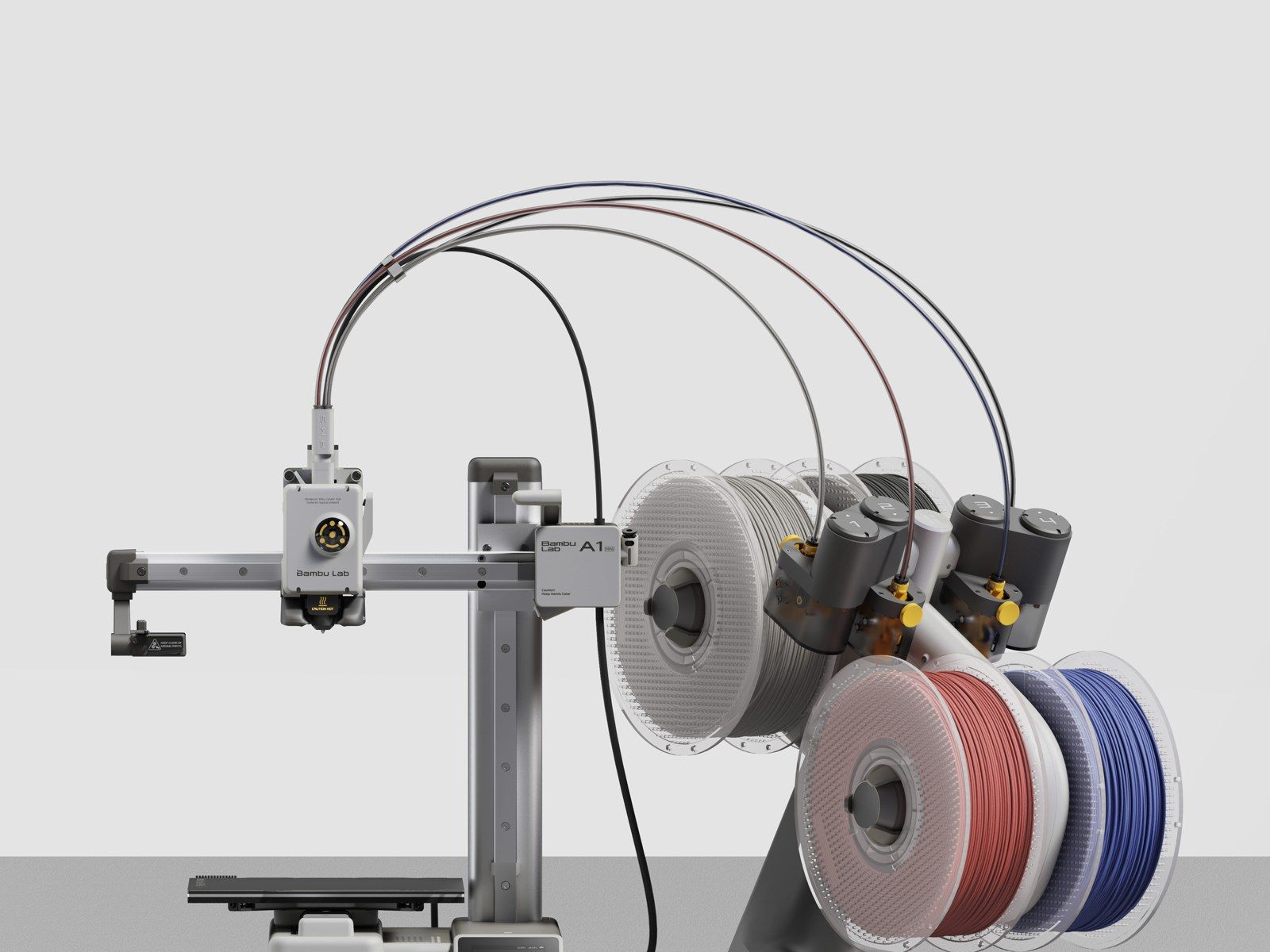
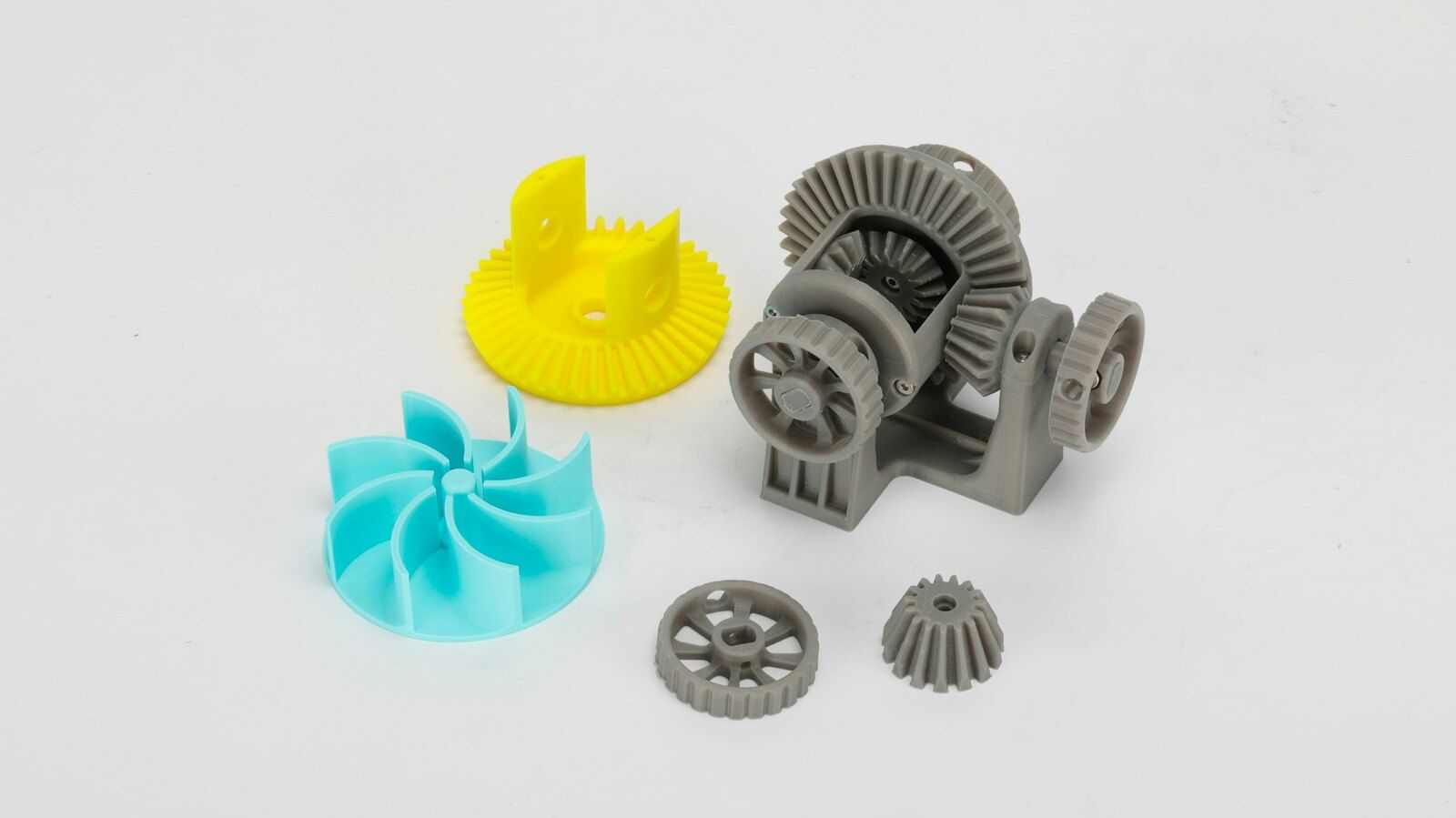
A hotend melts plastic filament and a nozzle lays it down in lines, each layer on top of the last. Bambu Lab's rule is a layer height of 20 to 70 % of the nozzle, so 0.08 to 0.28 mm with the usual 0.4 mm nozzle. The best sellers are $219 to $749; industrial ones such as UltiMaker's are sold on quote.
- PLA, PETG, ABS, ASA, TPU, nylon
- ±0.5 mm on a desktop printer
- Layers 0.08 to 0.28 mm
Pros
- The cheapest printers and the cheapest material
- Big parts in tough plastics, and several colours in one print
- The most choice of printers, filaments and help
Cons
- Weakest between the layers, so a part's direction matters
- Overhangs need supports, which leave marks
- Layer lines you can see and feel
Photos: Bambu Lab; printed parts: Snapmaker, Unsplash License
Vat photopolymerization
MSLA
Masked stereolithography, also called LCD resin printing
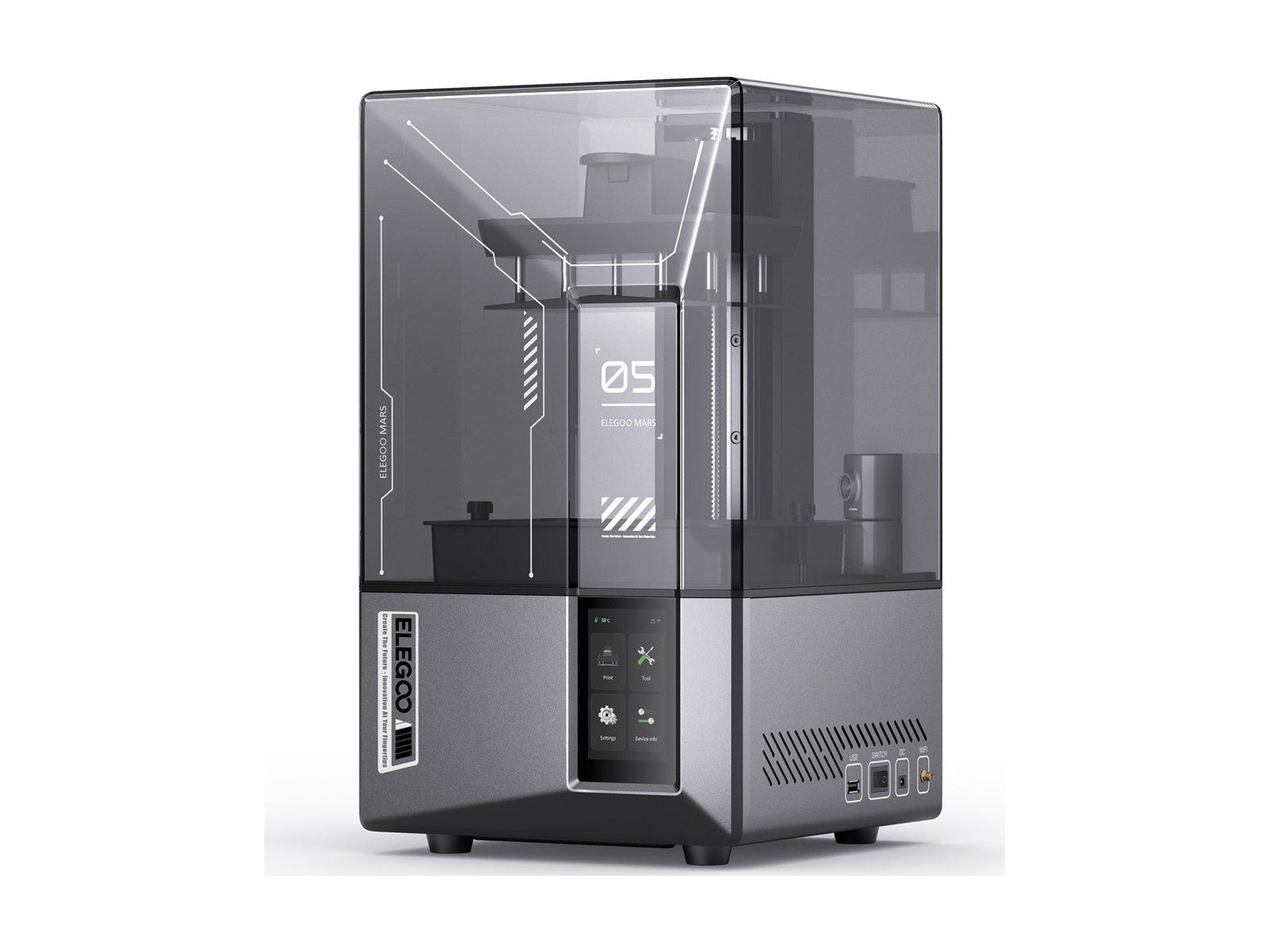
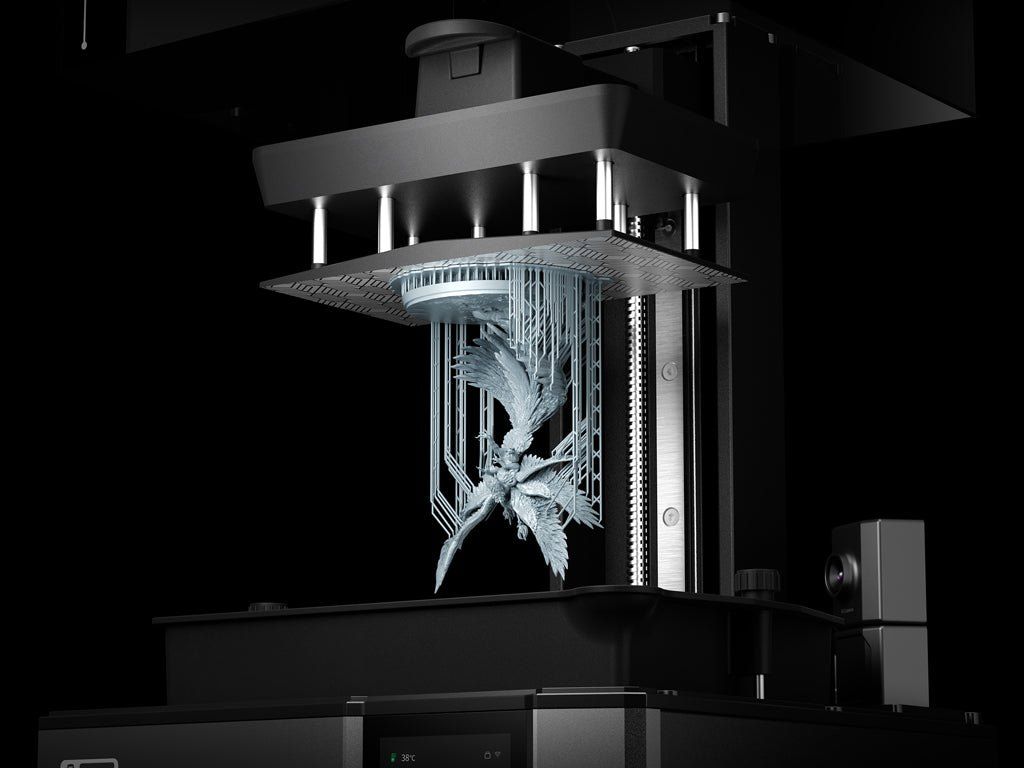
From $259Elegoo Mars 5 Ultra, on sale
Own one: yes, with gloves, a wash and a cure
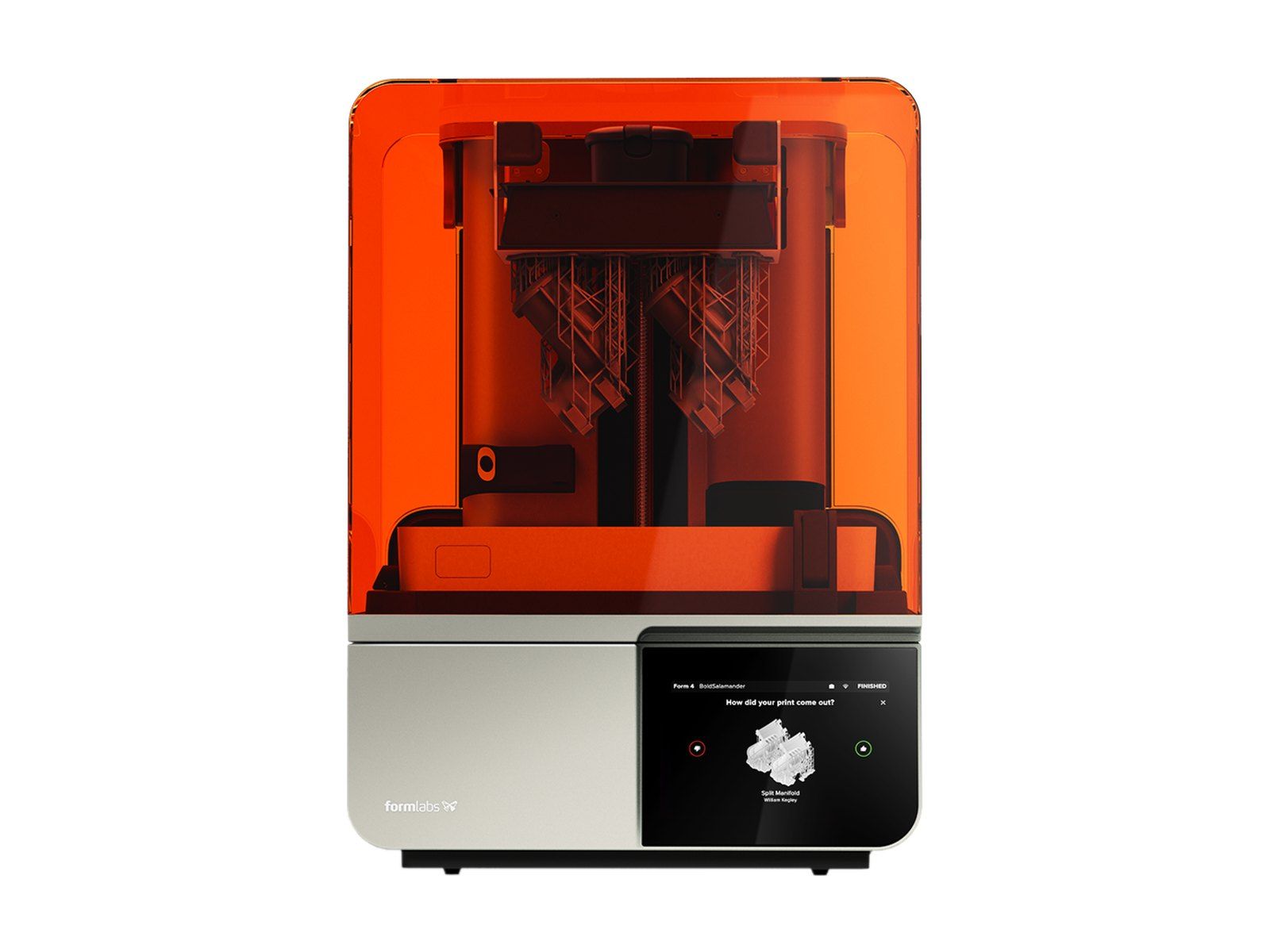
LEDs shine up through an LCD screen, which lets light through only where the layer is, and cure a whole layer of resin at once on the floor of a tank. The part hangs upside down from the build plate, which lifts a layer at a time. Formlabs' Form 4, from $2,625, is an MSLA printer too.
- Standard, tough, flexible and castable resins
- Pixels from 14 × 19 µm (Elegoo Saturn 4 Ultra 16K)
- Layers 0.01 to 0.2 mm
Pros
- Far finer detail than filament, for the price of a filament printer
- A full plate prints as fast as one part, since each layer cures at once
- Smooth surfaces, as strong in every direction
Cons
- Resin needs gloves, a ventilated room, a wash in alcohol and a UV cure
- Standard resins are brittle
- Smaller build volumes than filament printers
Photos: Elegoo and Formlabs
Vat photopolymerization
SLA
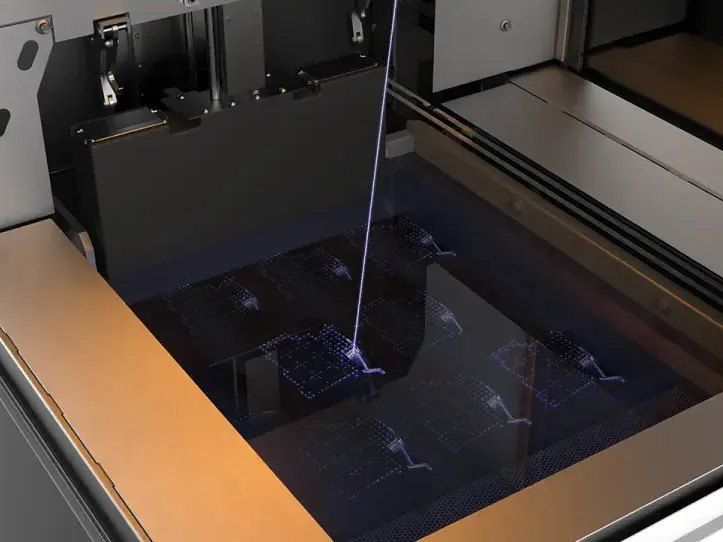
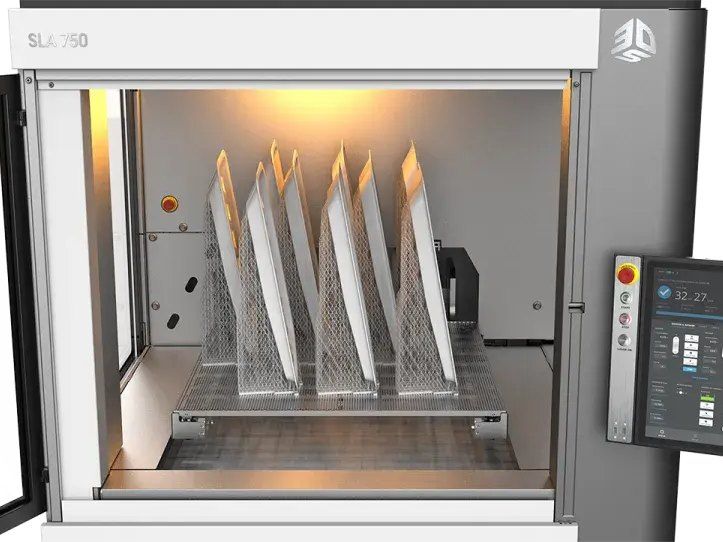
Stereolithography, with a laser
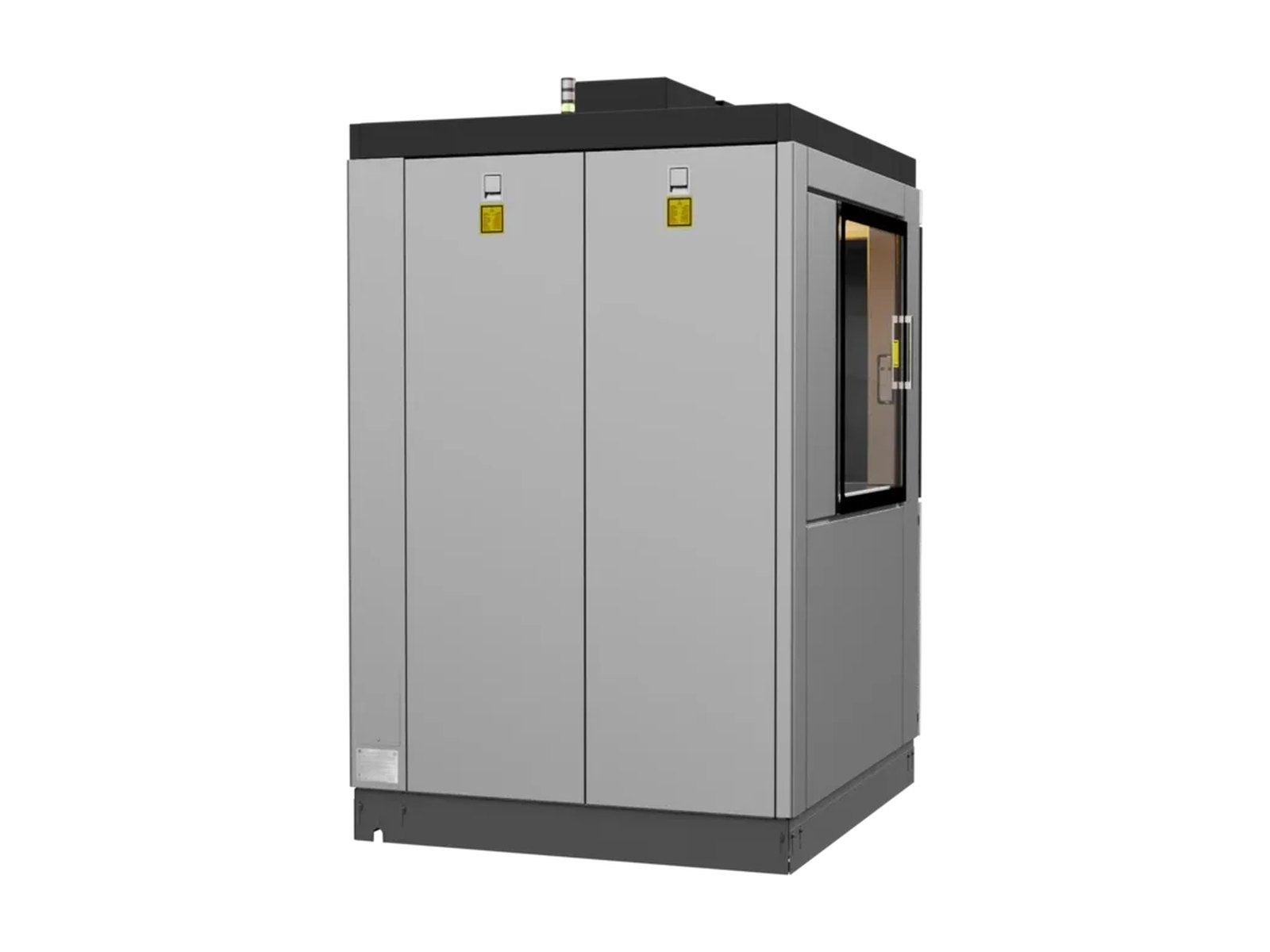
On quoteindustrial machines
Own one: rarely; services run the big laser machines
A laser, steered by mirrors, draws each layer on the resin. The first SLA printers were large vats with the laser above; Formlabs brought it to the desktop upside down with the Form 1 in 2011, and its current Form 4 masks the light with a screen instead.
- The same resins as MSLA
- ±0.05 mm at Protolabs
- Laser spot sets the detail
Pros
- The most accurate plastic process at Protolabs
- Very smooth, fine surfaces
- Large parts on industrial machines
Cons
- Formlabs says a laser can be much slower than DLP or MSLA
- The same mess and brittleness as any resin print
- Supports to cut off and sand
Photos: 3D Systems
Vat photopolymerization
DLP
Digital light processing
On quoteCarbon leases its printers by subscription
Own one: dental labs and factories do; makers order the parts
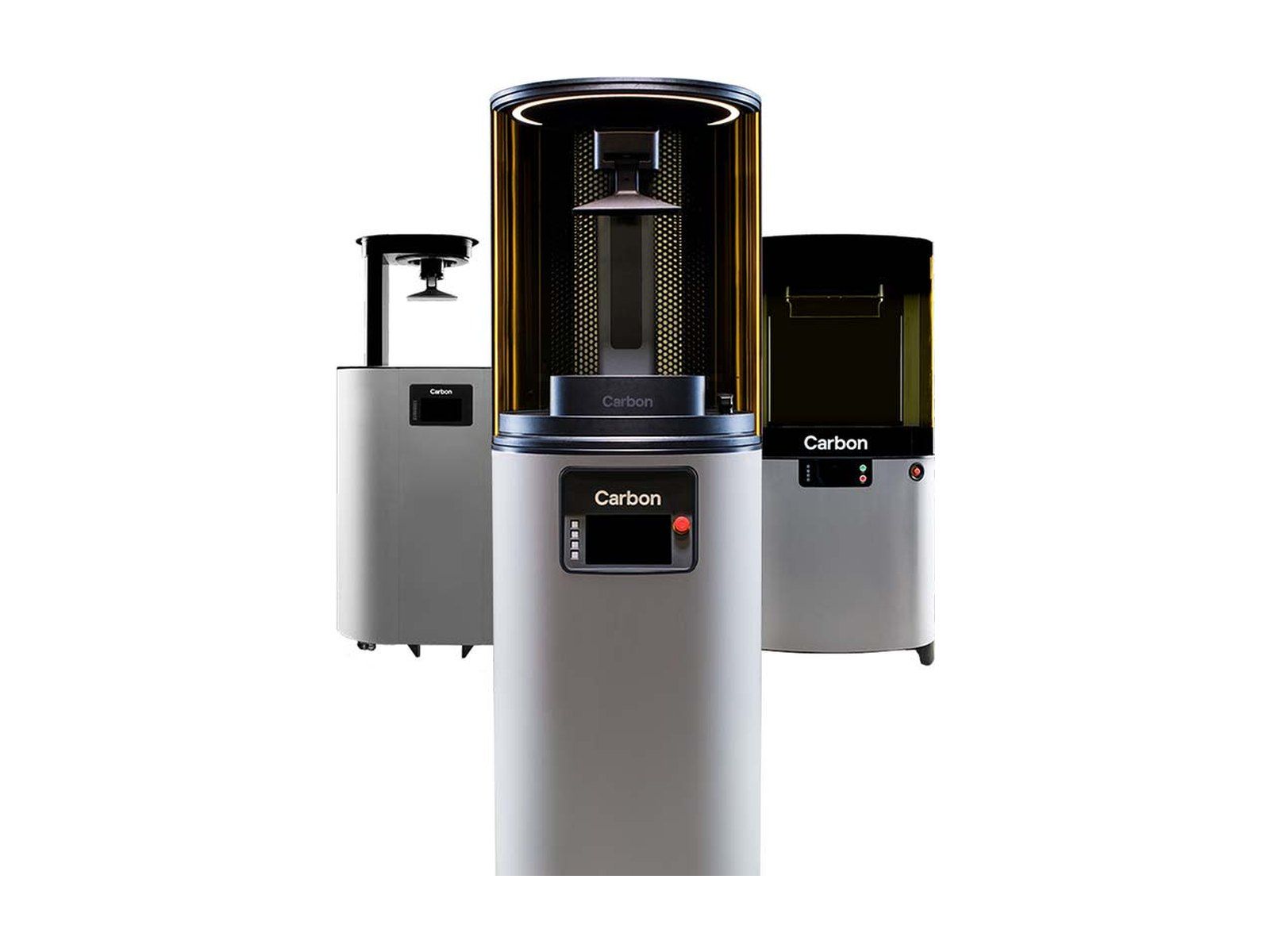
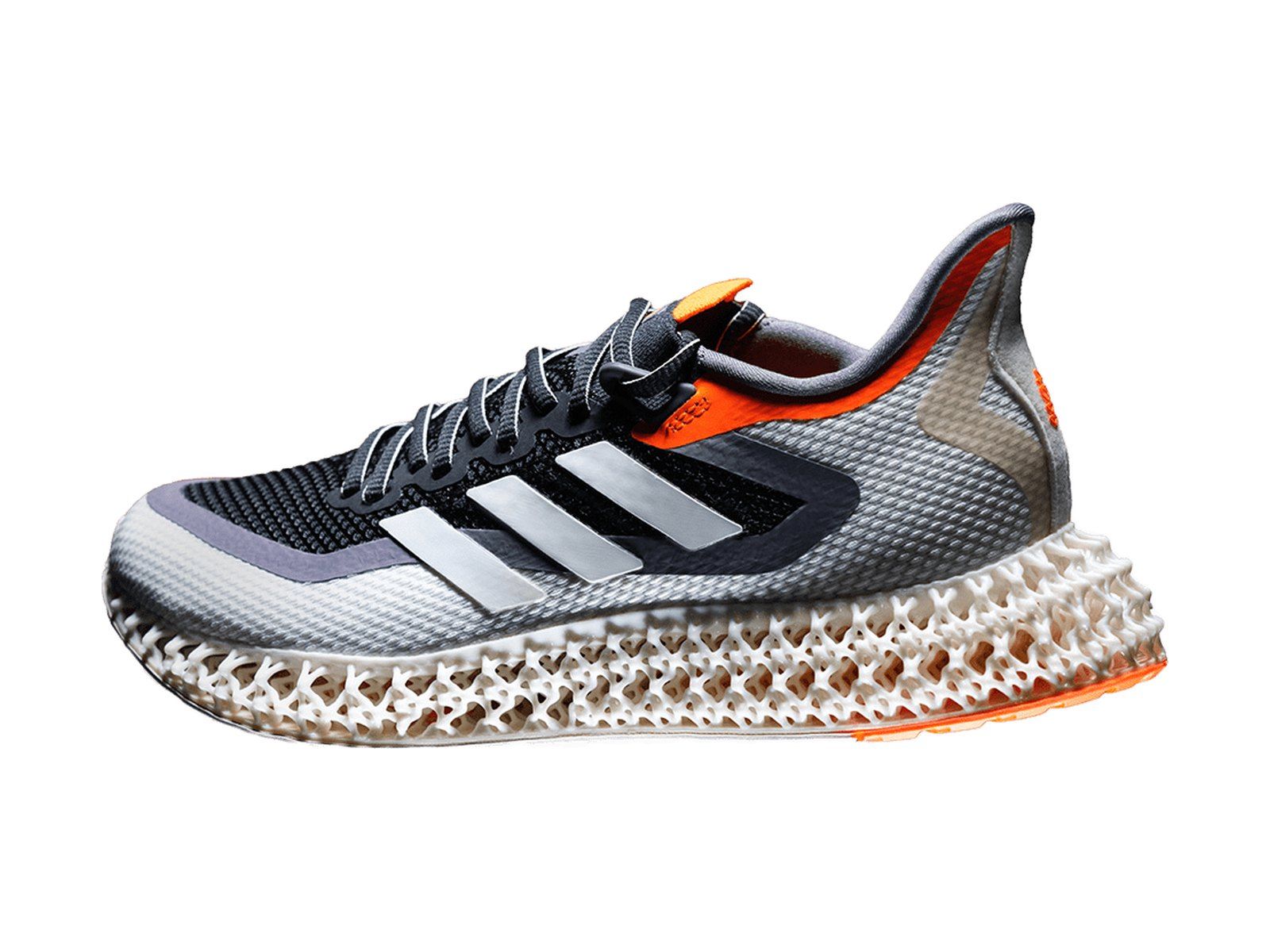
A projector, with a chip of tiny mirrors, shines a whole layer at once. Carbon's version, DLS, projects through a window that lets oxygen in, which keeps a layer of resin about 20 µm thick from curing, so the part grows without peeling off the floor. Then it's baked in an oven to strengthen it.
- Dental, engineering and elastomer resins
- One pixel per tiny mirror
Pros
- Fast, because each layer cures at once
- Popular in dental labs for that speed, Formlabs says
- Carbon's resins get stronger in the oven
Cons
- Prone to distortion across the build area, so it needs careful calibration
- Usually dearer than an LCD printer that does as well
- Big machines on quote or subscription only
Photos: Carbon
Material jetting
Material jetting
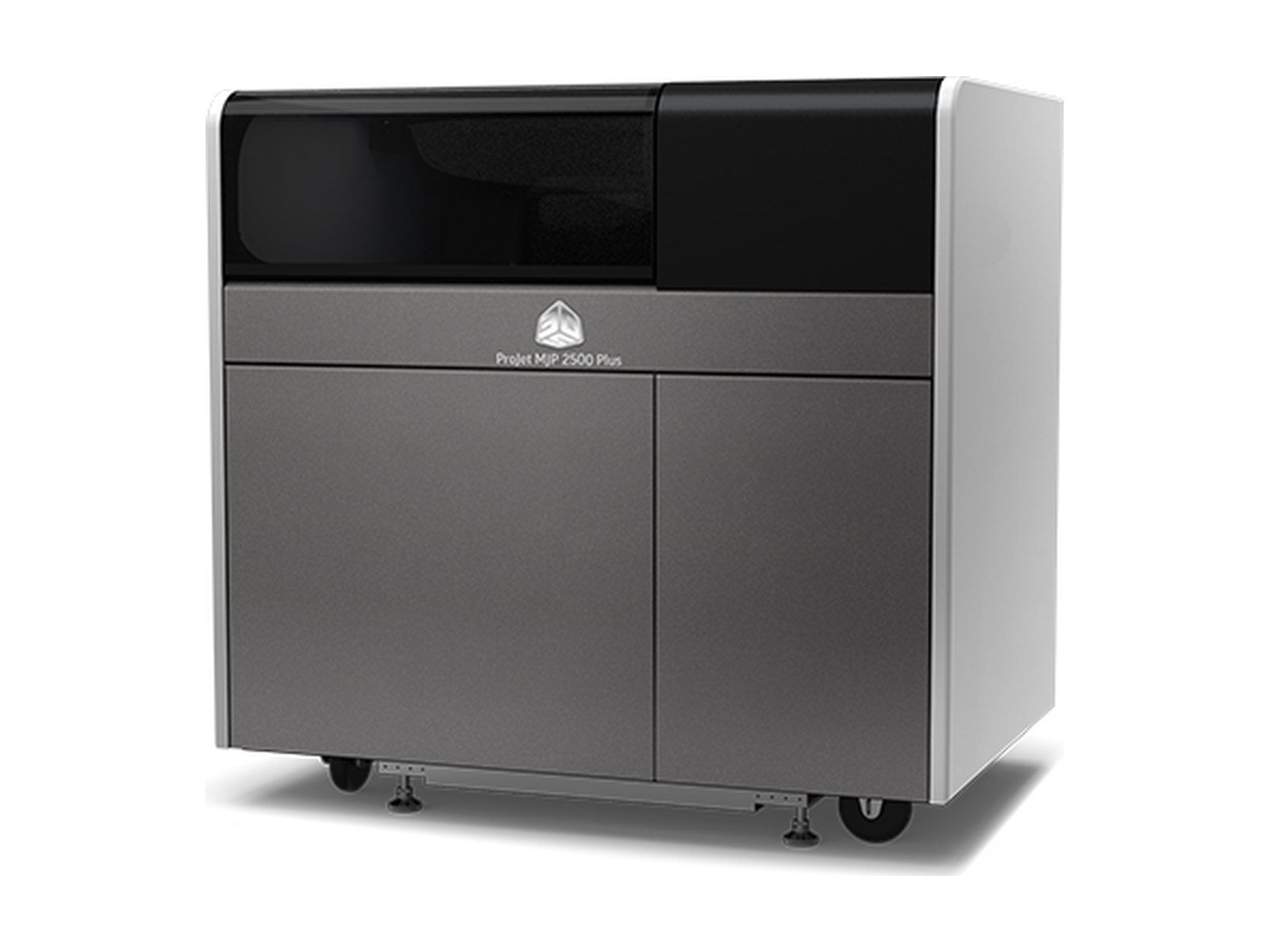
Sold as PolyJet by Stratasys and MultiJet by 3D Systems
$99,000Stratasys J55, at its launch in 2020
Own one: no, order the parts
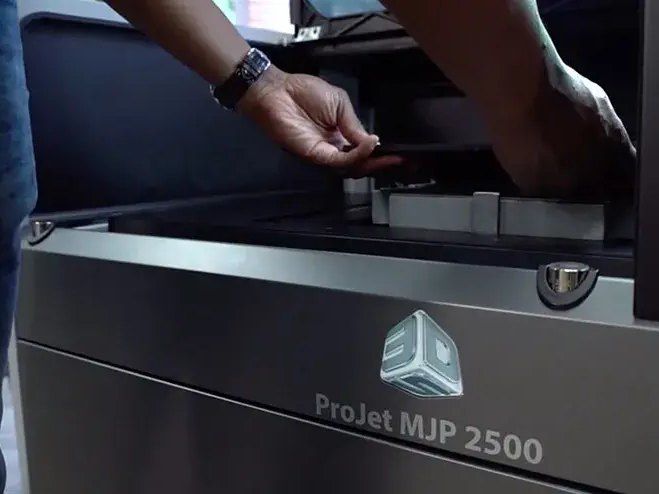
An inkjet head jets droplets of resin and a UV lamp cures them as it passes. Different heads jet different resins, so one part can be several colours, clear, and rubbery in one place and rigid in another. A support material fills every gap and is washed off with water afterwards. 3D Systems makes the same kind of printer, and one that jets wax for casting jewellery.
- Layers 16 to 32 µm
- ±0.13 mm at Protolabs
- Resin at about $300 to $1,000 a kilogram
Pros
- Full colour and several materials in one part
- Very smooth and accurate, with almost no marks from supports
- Prototypes that look and feel like the product
Cons
- Brittle, and the resin weakens in light over time
- Expensive machines and resin
- Every part needs support material, which costs resin
Photos: 3D Systems
Powder bed fusion
SLS
Selective laser sintering
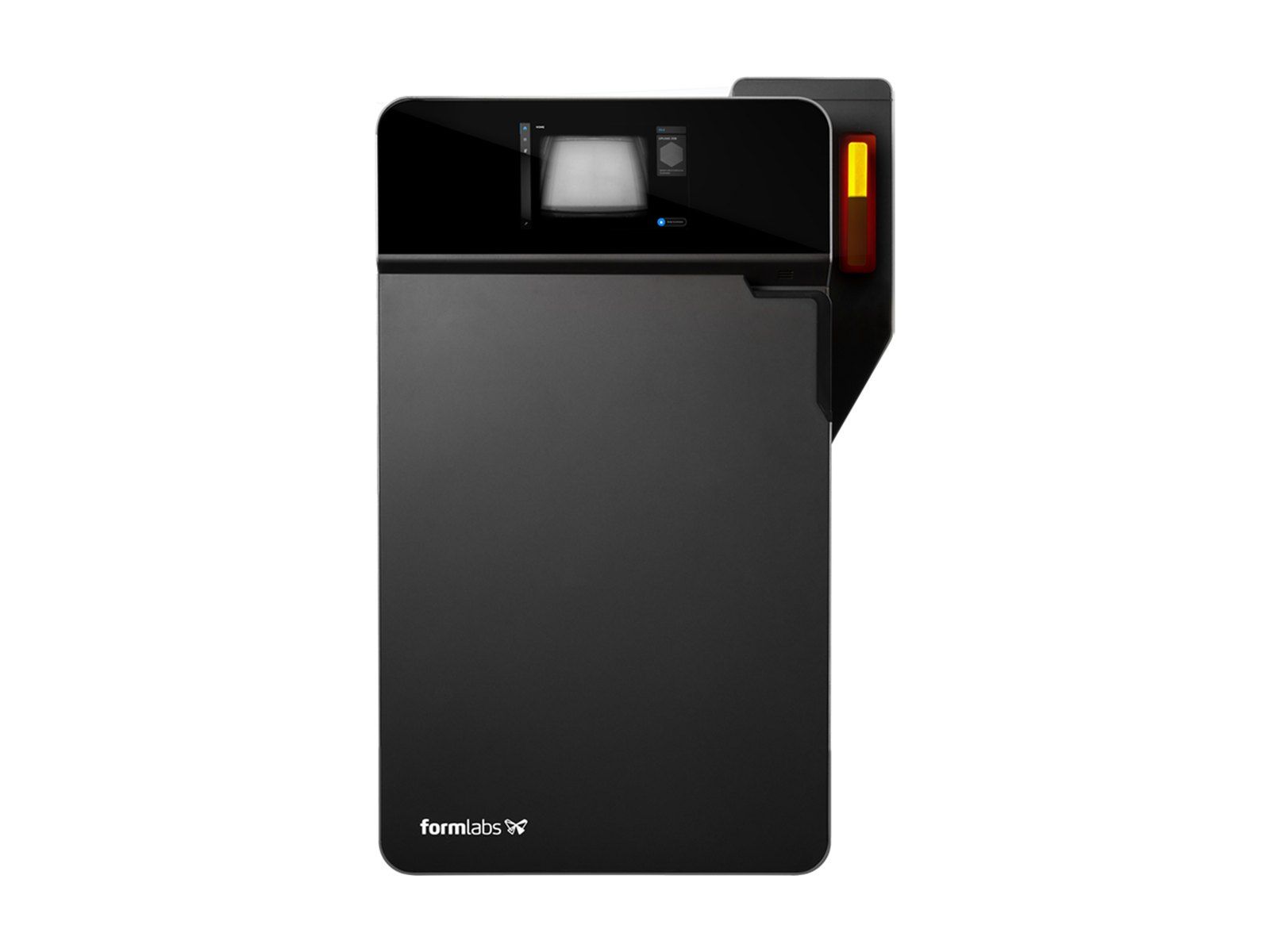
From $24,649Formlabs Fuse 1+ 30W; $84,999 for the bigger Fuse X1
Own one: small companies do; makers order the parts
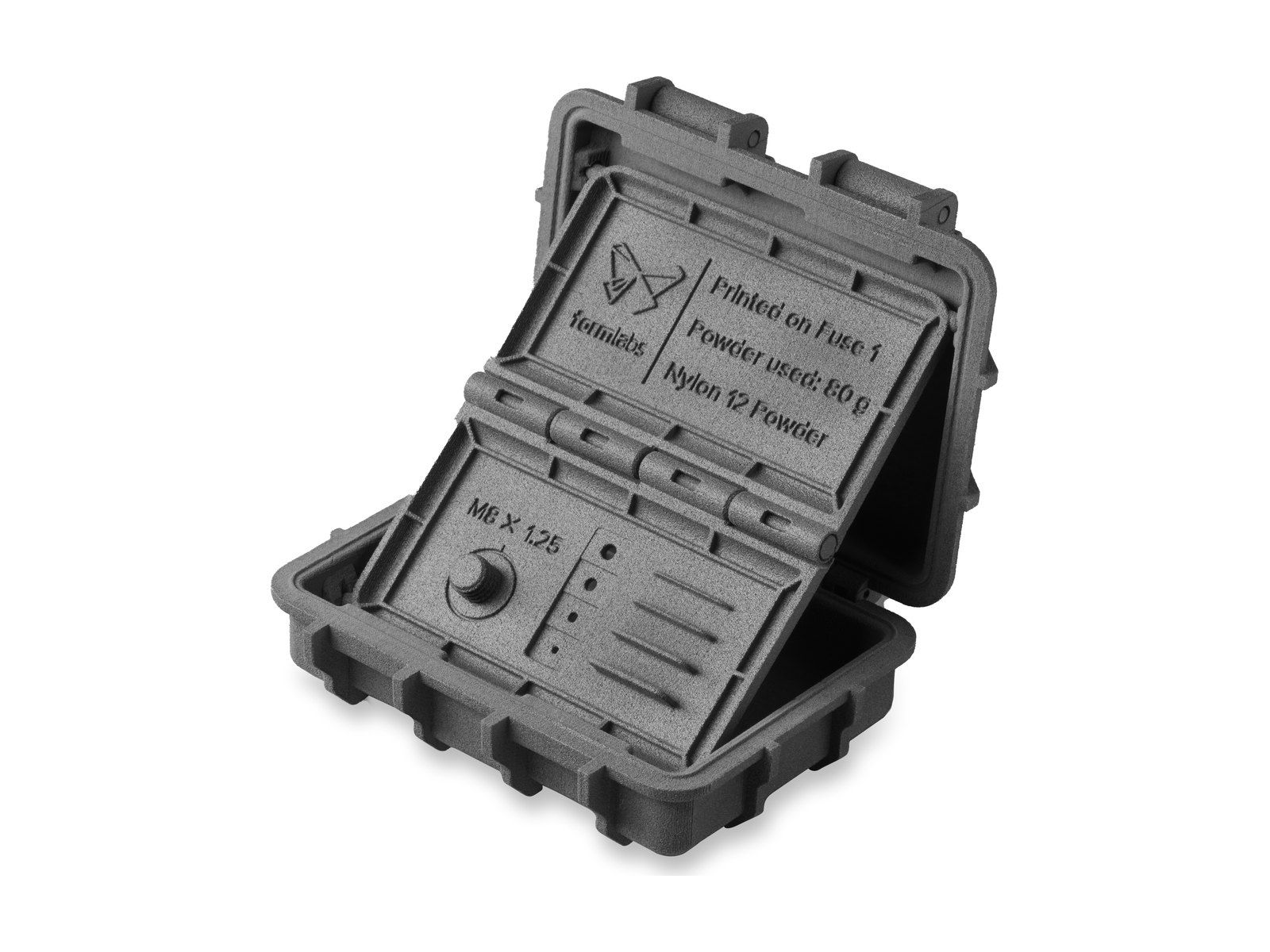
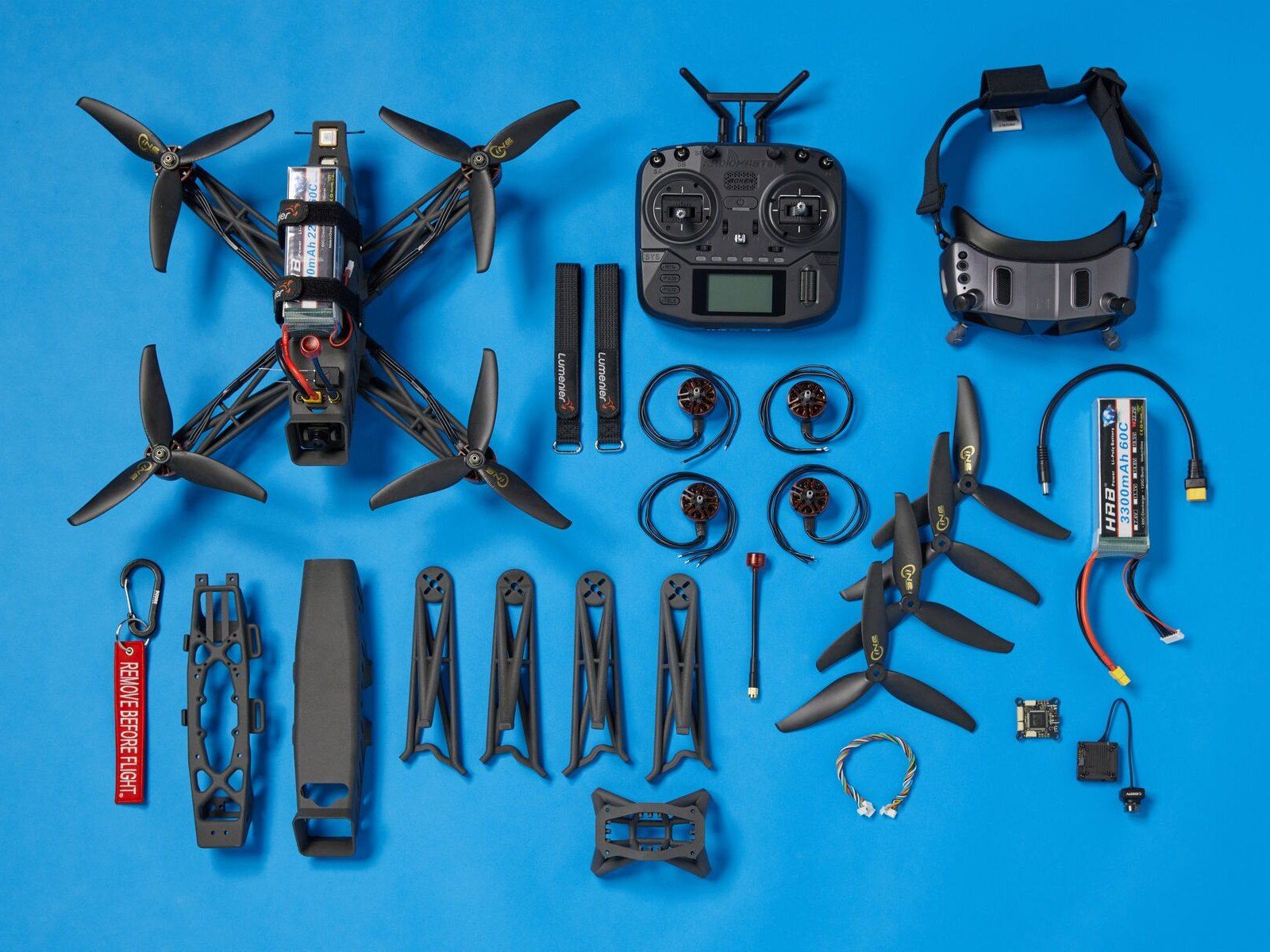
A roller spreads a layer of nylon powder, heated to just under its melting point, and a laser traces the part into it. The loose powder holds the part up, so there are no supports, and parts can be packed in three dimensions to fill the chamber. Formlabs counts about $60,000 for its whole setup, with the sieving station, against $200,000 to $500,000 or more for the industrial machines it competes with.
- Nylon 12, nylon 11, TPU, glass-filled nylon
- ±0.25 mm at Protolabs
- Formlabs' layers: 0.11 mm
Pros
- Strong parts, which Formlabs likens to injection moulded ones
- No supports, so any shape prints, even parts inside parts
- A full chamber prints many parts at once
Cons
- Machines cost as much as a car, with a powder station on top
- Unused powder has to be sieved and mixed with new
- A slightly rough, grainy surface
Photos: Formlabs
Powder bed fusion
MJF
Multi Jet Fusion, HP's process
Under $60,000HP MJF 1200, due in early 2027
Own one: no, order the parts
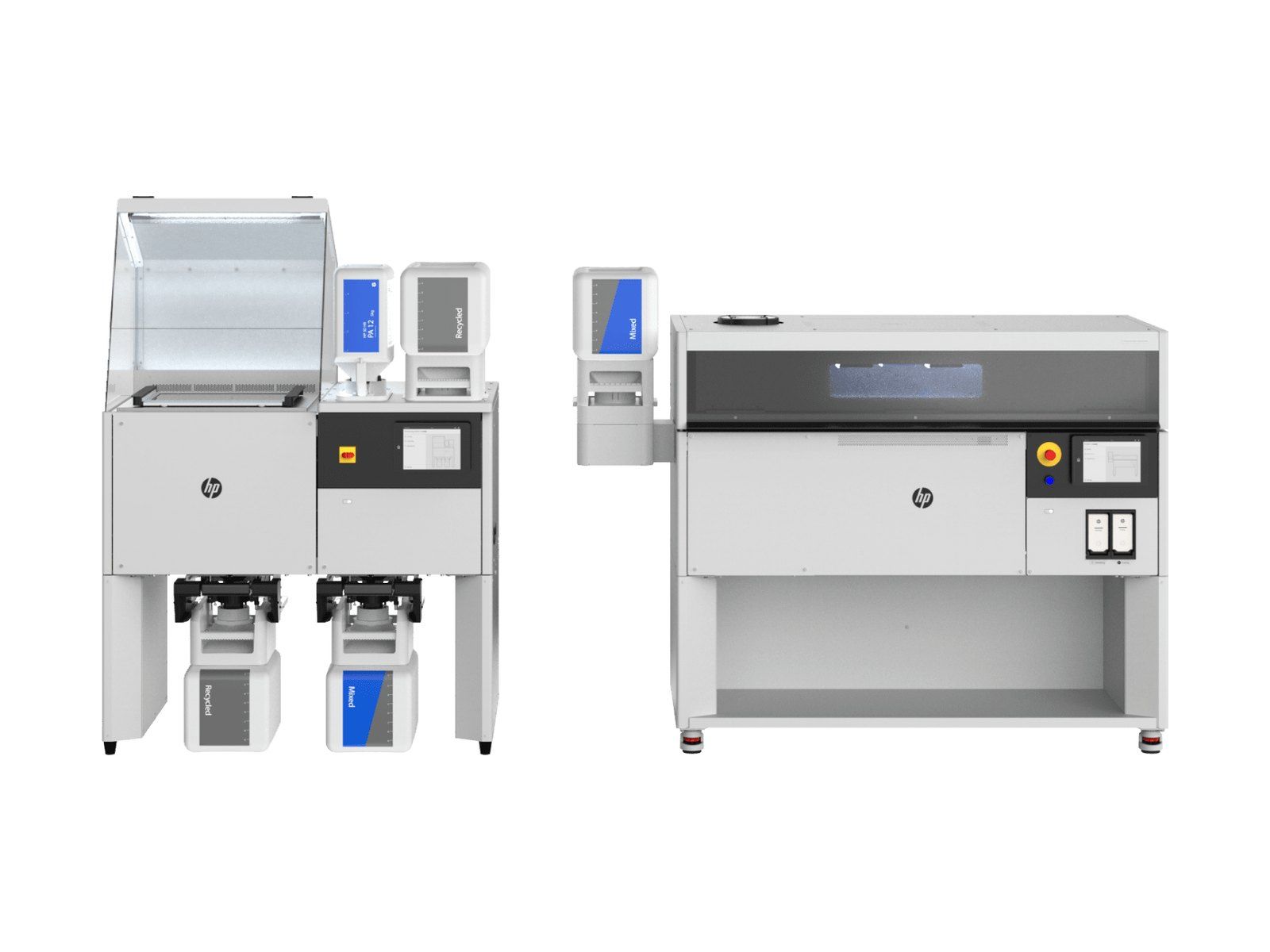
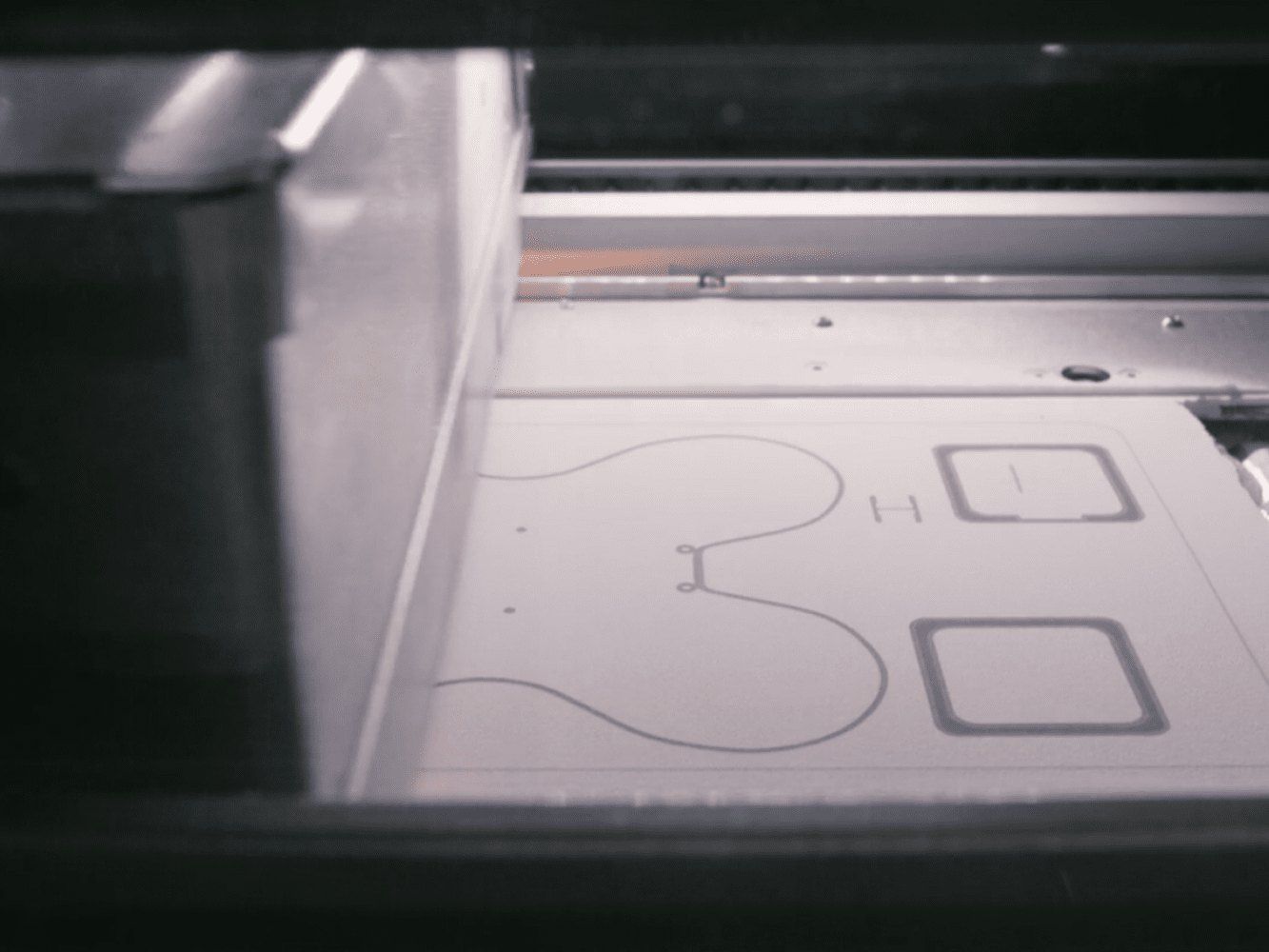
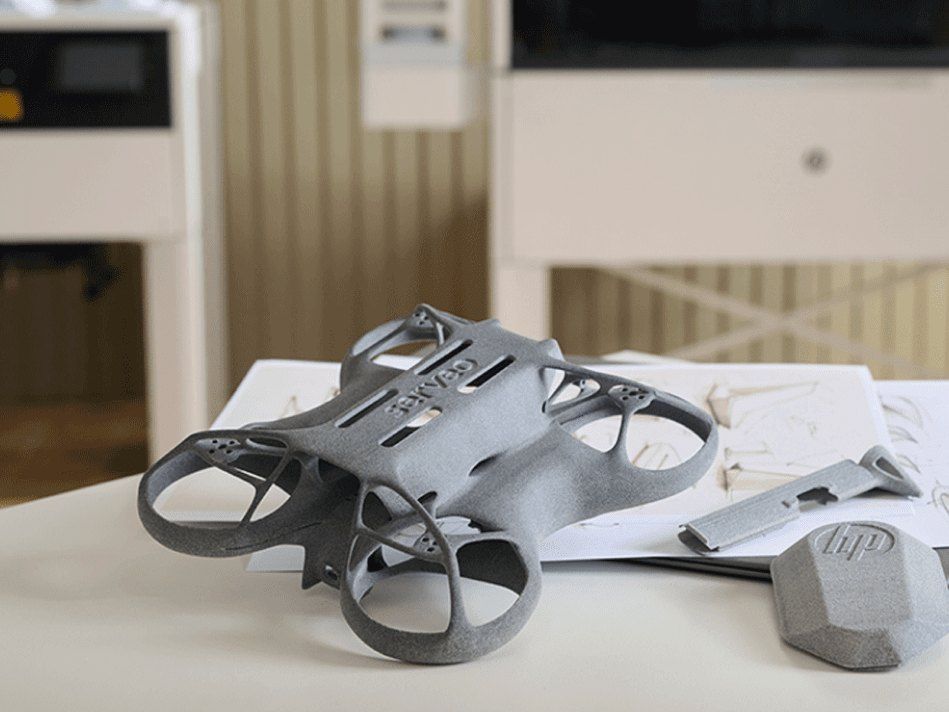
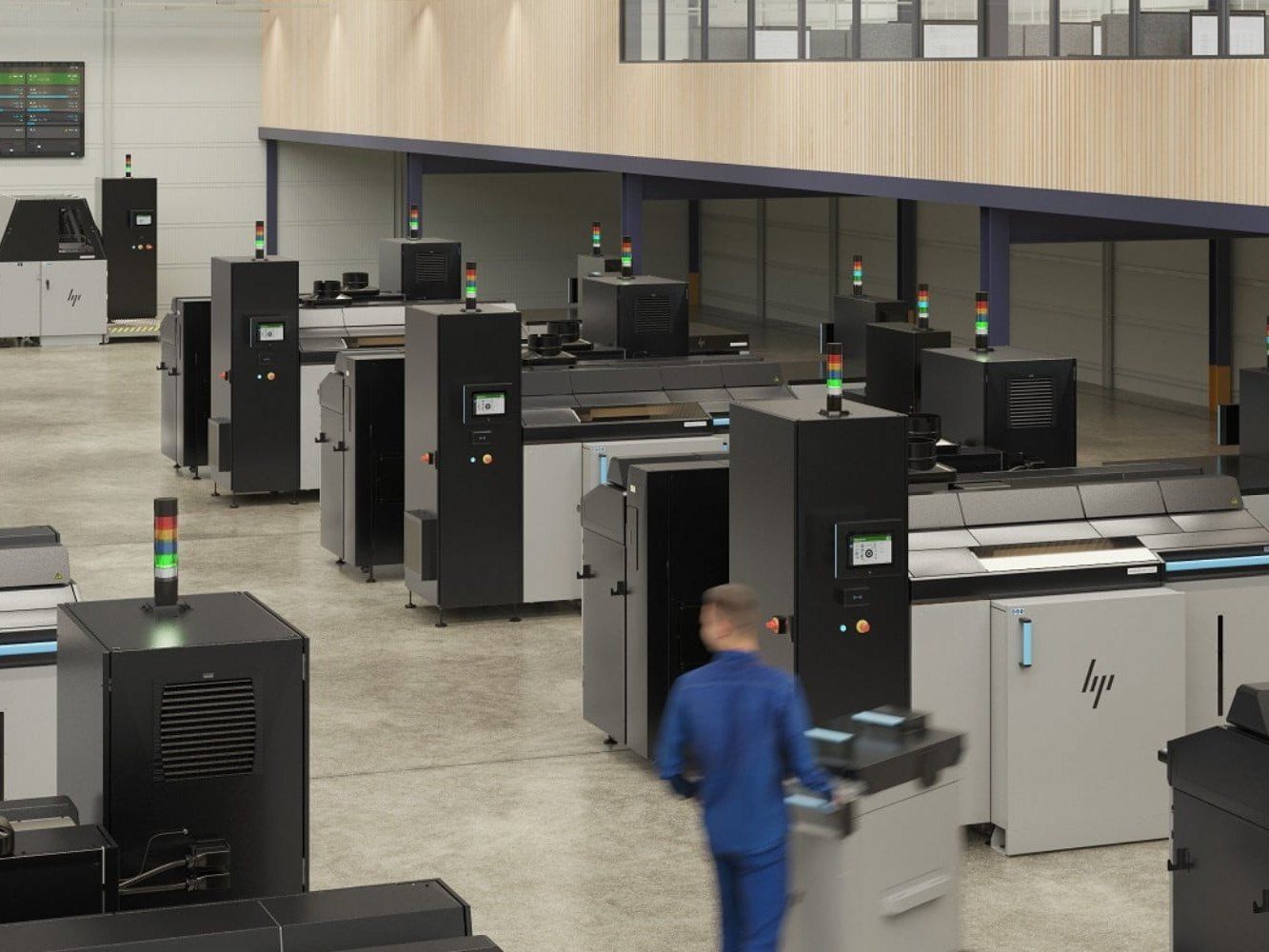
Instead of a laser, an inkjet head jets a fusing agent where the part is and a detailing agent around its edges, and fusing lamps heat the bed so the inked powder melts together. A whole layer fuses at once. HP says up to 80 % of its PA 12 powder can be used again.
- Mostly nylon 12 (PA 12), also PA 11 and TPU
- ±0.30 mm at Protolabs
- Protolabs dyes its parts black
Pros
- Strong nylon parts, a little more even in every direction than SLS, Protolabs says
- No supports, and many parts per build
- Most of the powder is used again
Cons
- Industrial machines only
- A service contract of about 10 % of the hardware price a year, HP says
- Slightly less accurate than SLS at Protolabs
Photos: HP
Powder bed fusion
Metal laser powder bed fusion
Sold as DMLS, SLM and LPBF
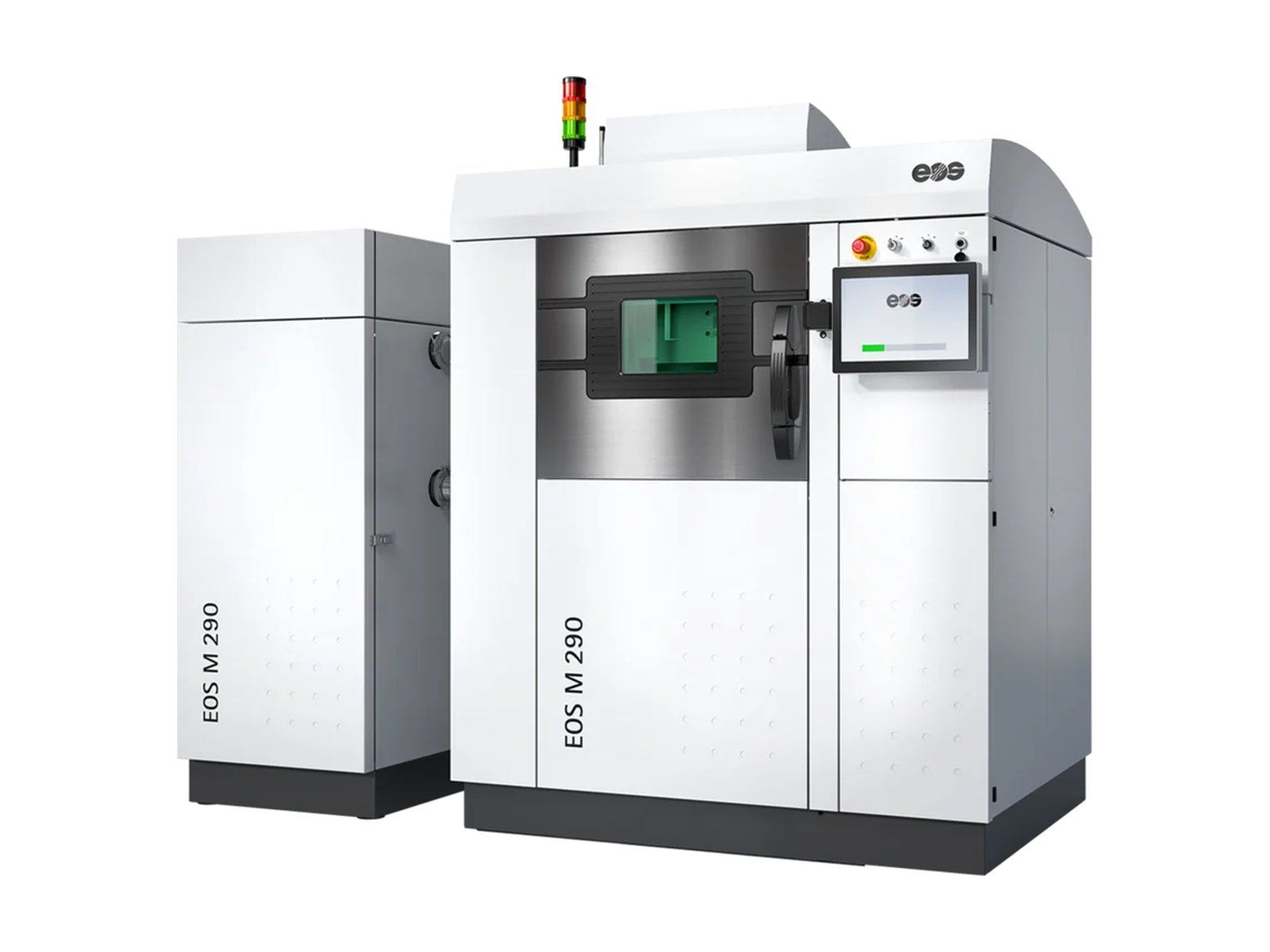
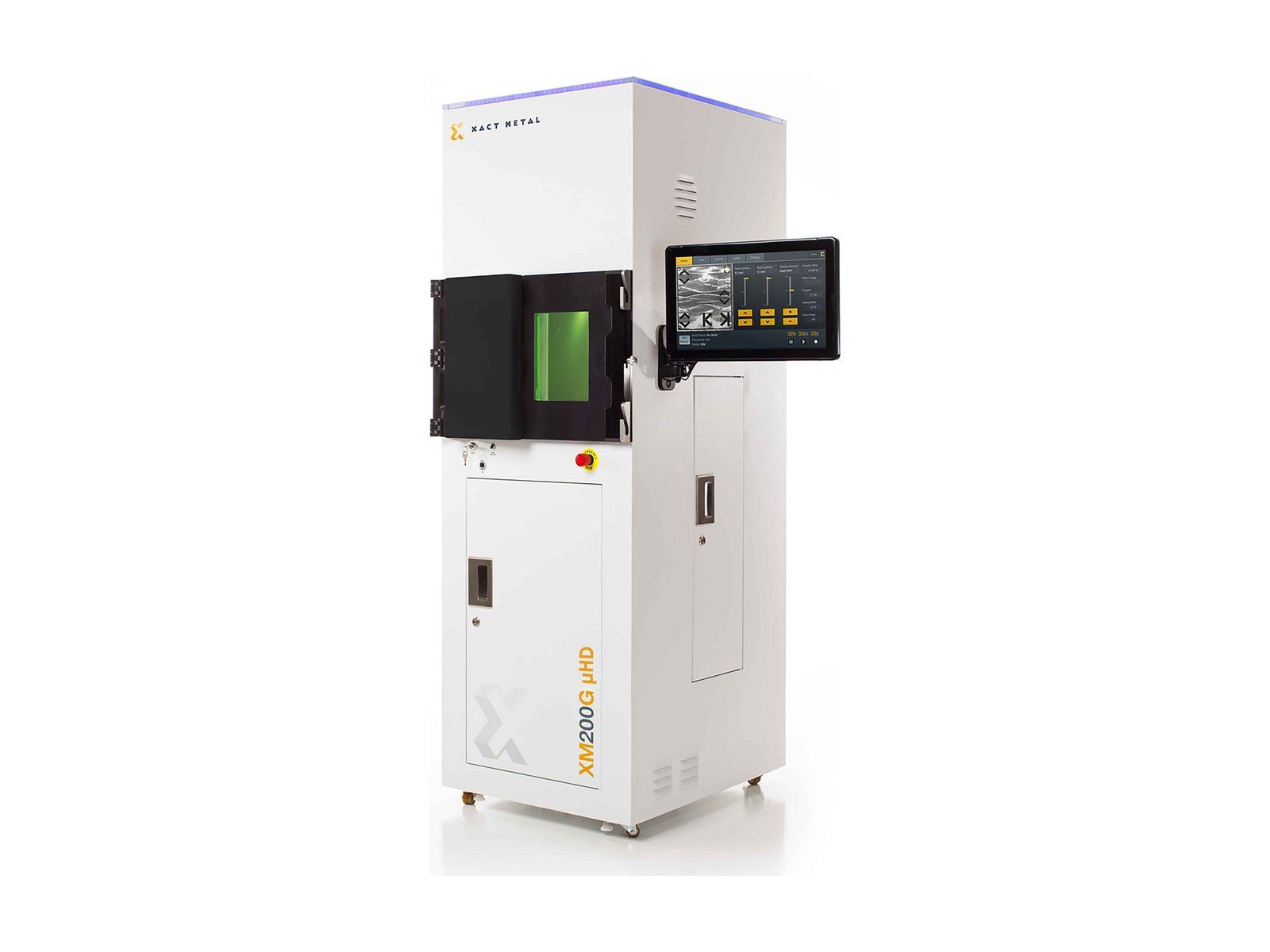
From $90,000Xact Metal XM200G at its launch in 2021
Own one: no, order the parts
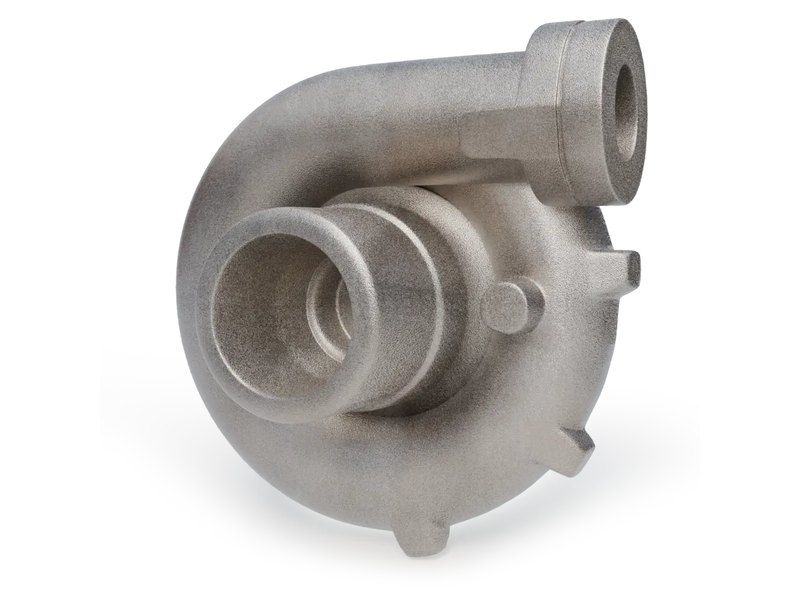
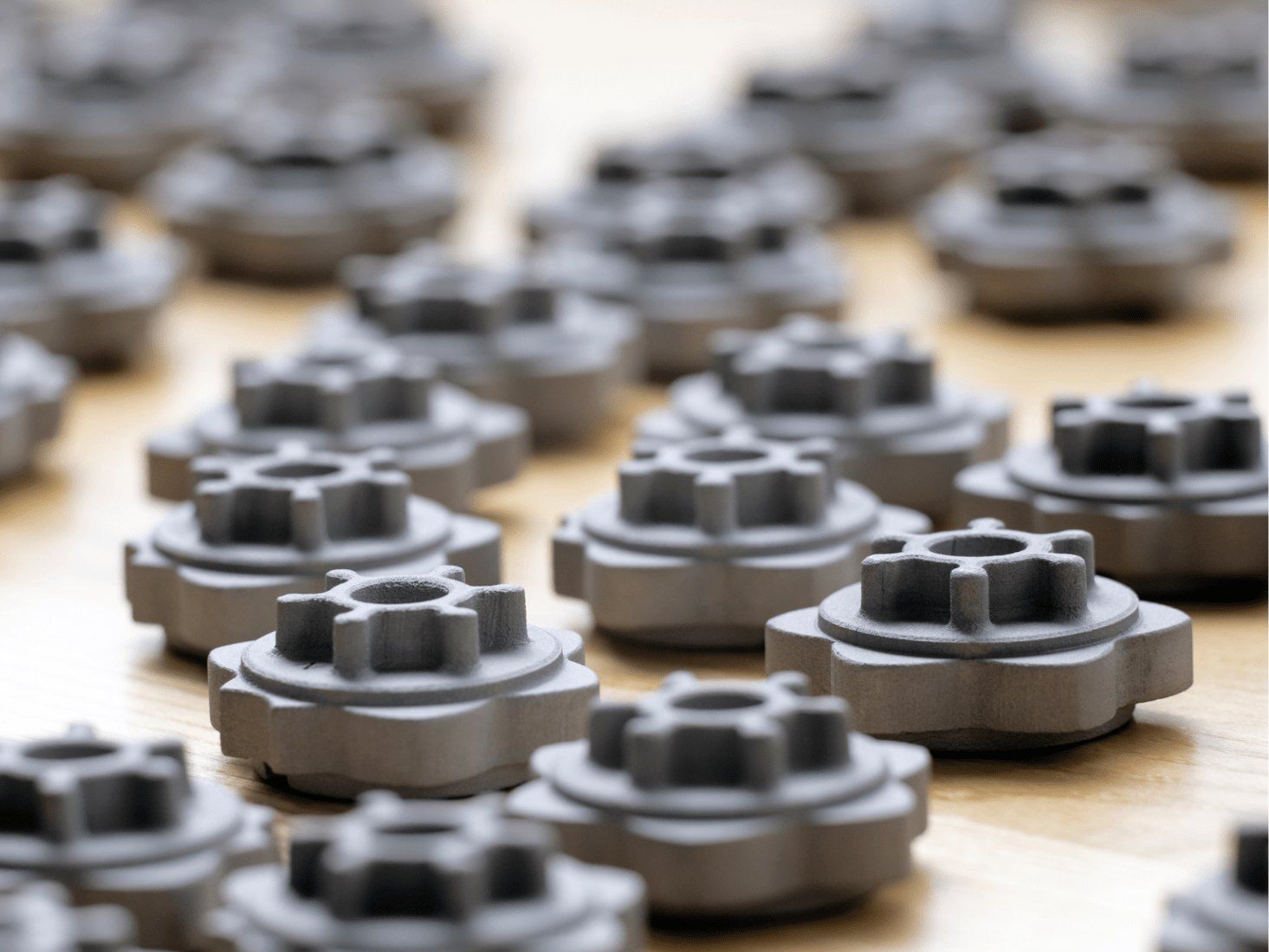
The chamber is filled with an inert gas such as argon, and a laser melts each layer of metal powder. The part is built on solid metal supports joined to a steel plate, heat-treated on the plate to relieve stress, then cut off with a saw or wire EDM. EOS shows no prices for its machines.
- 316L, 17-4 PH, titanium, aluminium, Inconel
- ±0.08 mm at Protolabs
- Layers 20 to 50 µm
Pros
- Fully dense metal parts, near 100 % at Protolabs
- Lattices and assemblies printed as one part
- Steels, titanium, aluminium and nickel alloys
Cons
- The supports are metal, cut and machined off at a cost
- More prone to fatigue than conventionally made metal, Protolabs Network says
- $90,000 and up for the machine
Photos: EOS, Xact Metal and JLC3DP
Binder jetting
Metal binder jetting
Printed with glue, then sintered in a furnace
About $550,000HP Metal Jet S100
Own one: no, it's for factories
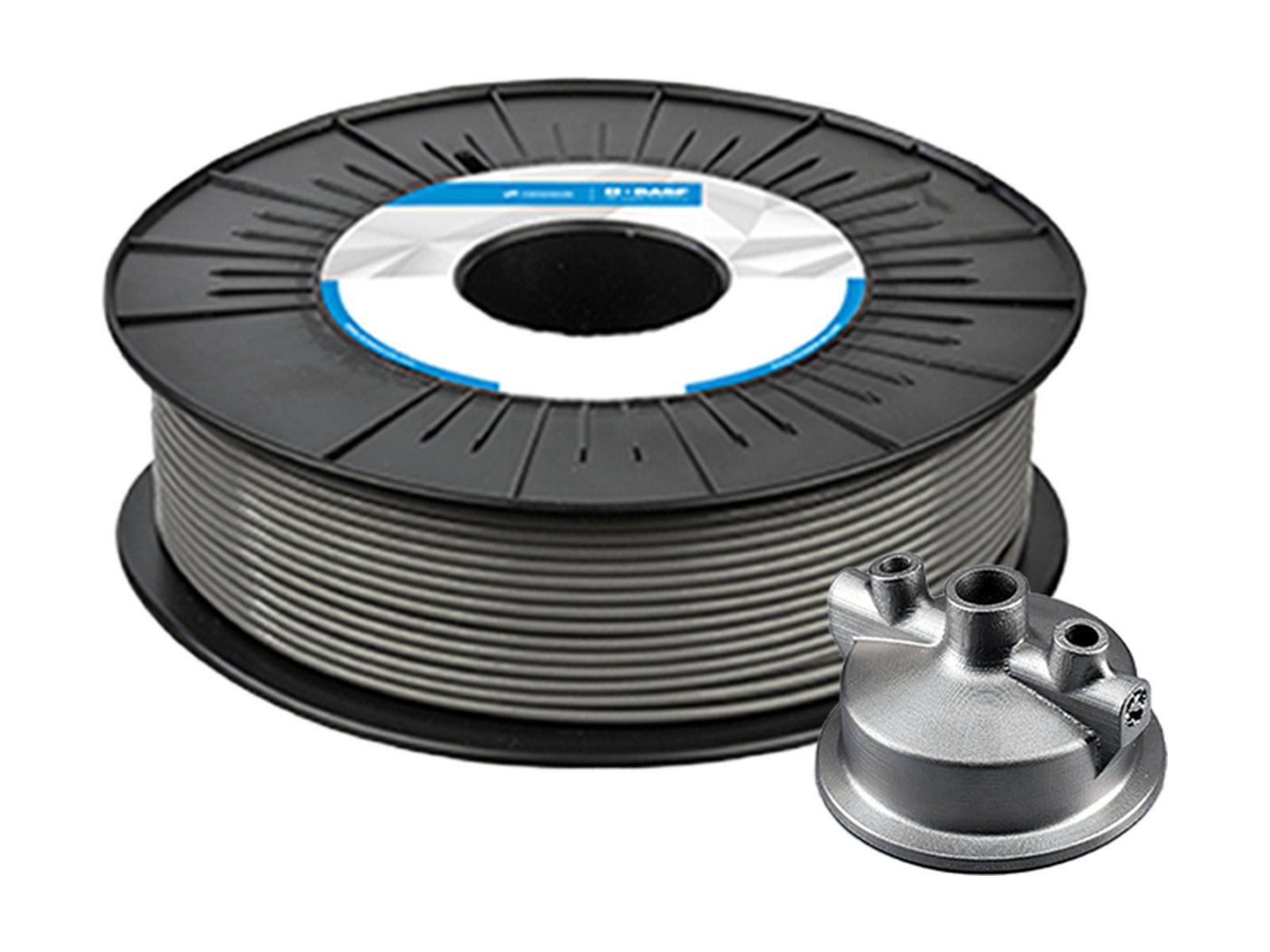
An inkjet head jets a binder onto metal powder, layer by layer, making a fragile "green" part. It's cured, then sintered in a furnace, where the metal grains fuse and the part shrinks to its final size. Desktop Metal, a big name in it, went bankrupt in 2025 and its binder jet business was sold to Arc Impact.
- 316L and 17-4 PH stainless steel
- No supports
- ±0.3 mm at JLC3DP
Pros
- No supports to remove
- Made for large volumes of parts, HP says
- Complex shapes and fine details
Cons
- Parts shrink in the furnace, so they're printed oversize
- A furnace and curing on top of the printer
- Half a million dollars for the printer
Photos: HP
Material extrusion
Metal FDM
Bound metal: metal powder held in a plastic binder
Your filament printerand a debinding and sintering service
Own one: print it yourself, then send the parts off
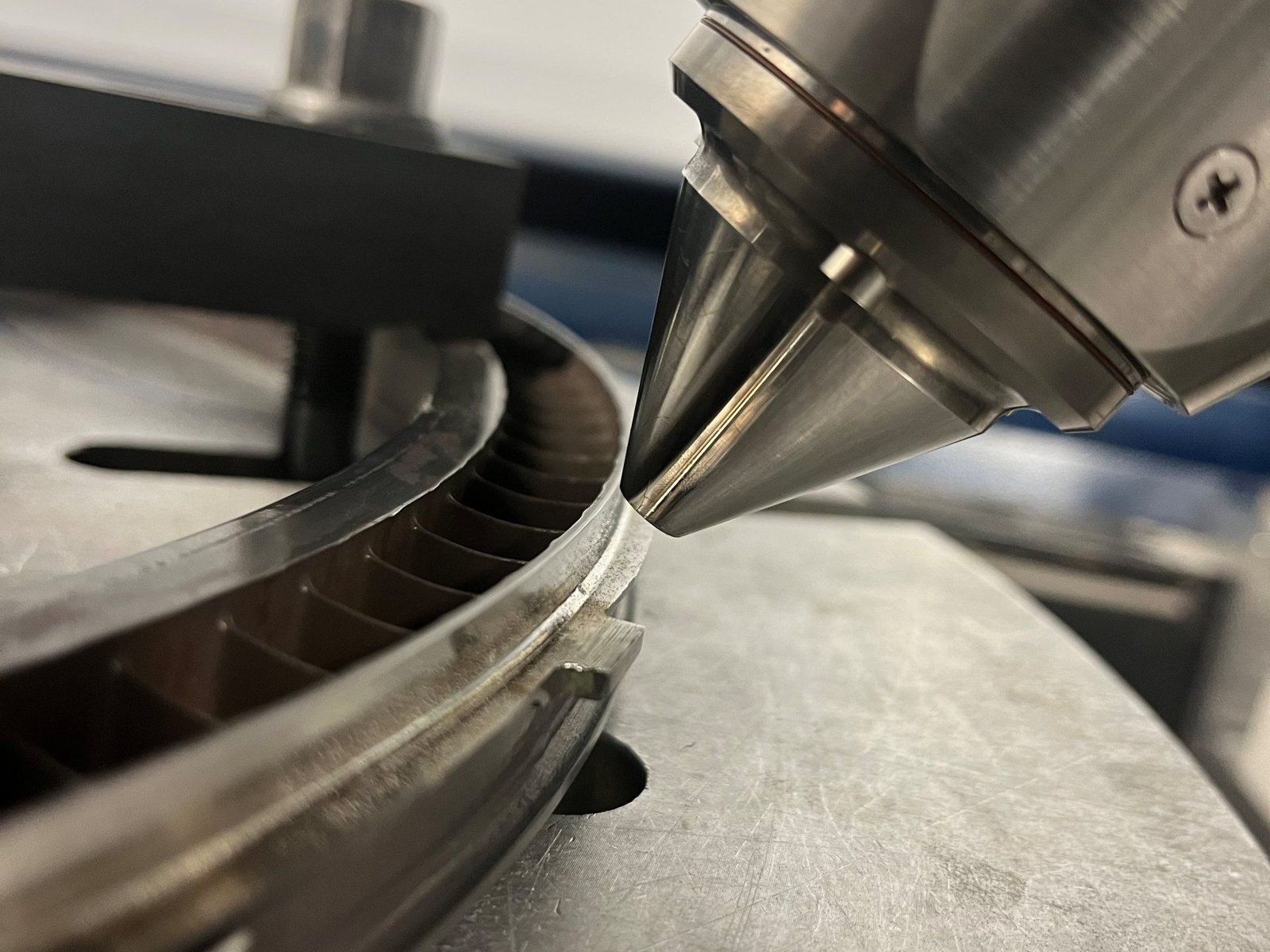
A filament that's mostly stainless steel powder prints on an ordinary filament printer. The printed part is then debound, to take the plastic out, and sintered into solid metal. Forward AM, which makes Ultrafuse 316L and 17-4 PH filament, has partners do both. Parts shrink, so MatterHackers scales them up 120 % across and 126 % in height.
- 316L and 17-4 PH stainless steel
- Layers 0.10 to 0.25 mm
- Printed 20 to 26 % oversize
Pros
- Metal parts from a printer you already have
- No loose metal powder at home
- Brackets, tools and fixtures in small numbers
Cons
- Waiting while the parts are sent off and sintered
- Shrinks more in height than across, so it takes test prints
- Only two stainless steels
Photo: Forward AM
Directed energy deposition
DED
Directed energy deposition, including wire arc (WAAM)
On quoteno published prices
Own one: no
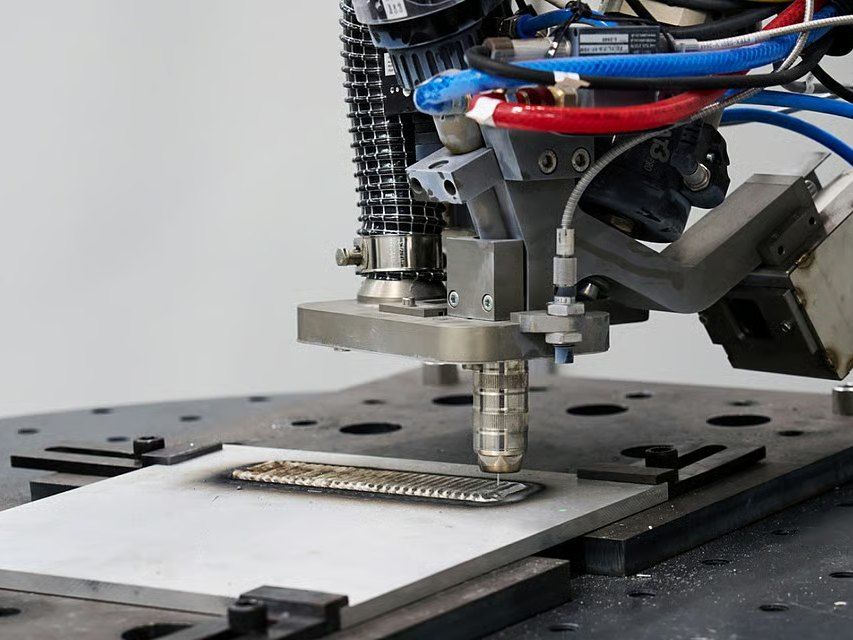
A head melts metal wire or powder as it feeds it in, with a laser, an electron beam or a welding arc, and builds the part bead by bead. It's for big parts and repair: Hyundai uses wire arc printing for large structural parts, and GKN Aerospace uses DED to restore jet engine parts.
- Steel, stainless, aluminium, titanium
- Builds onto existing parts
Pros
- Very large parts in one piece
- Repairs worn parts by adding metal back
Cons
- Coarse beads, not fine detail
- Industrial machines only
Photos: GKN Aerospace and Hyundai
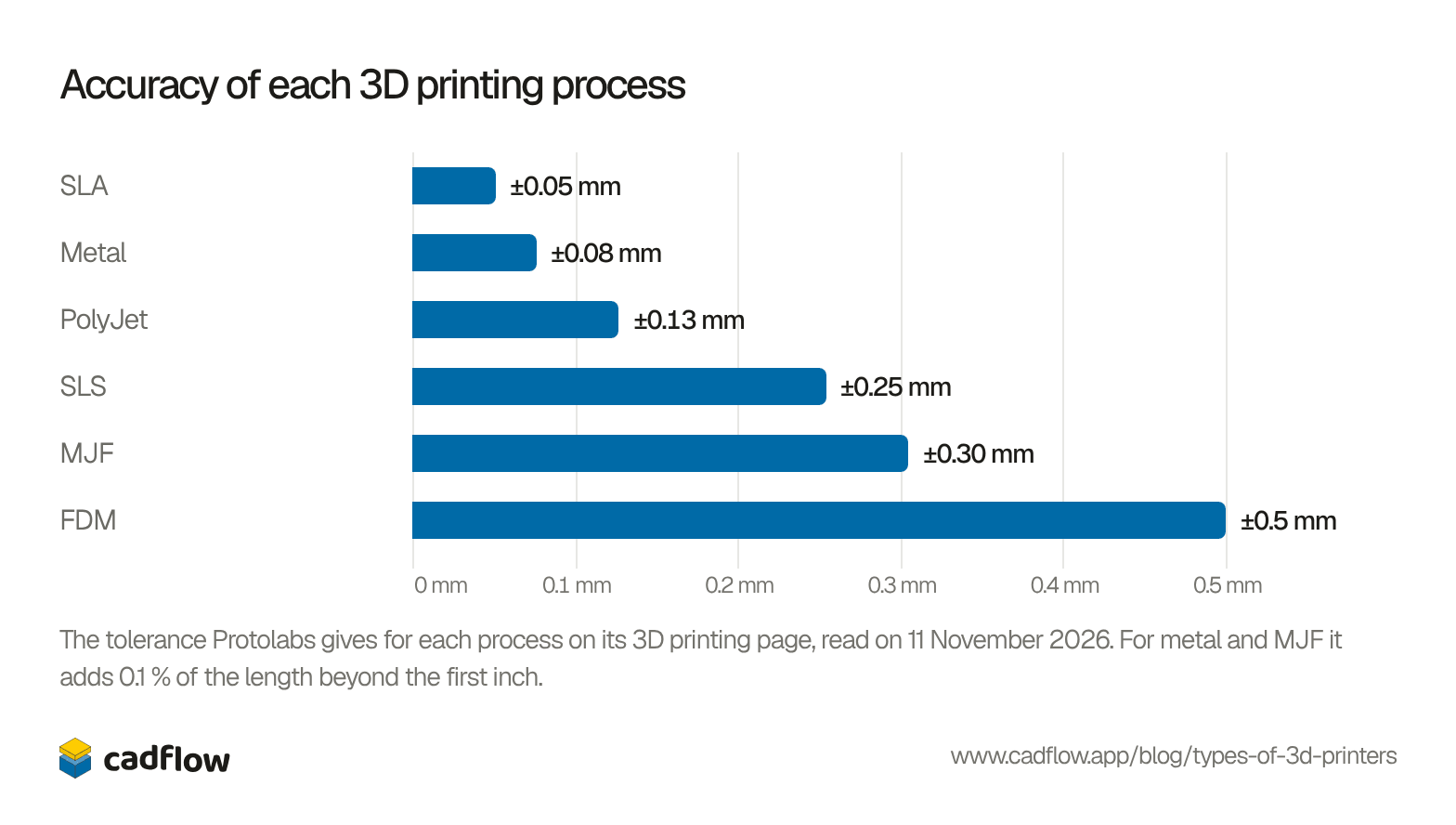
How accurate each one is
Protolabs gives a tolerance for every process it runs, on its own industrial machines. A desktop printer usually does worse: Protolabs Network gives ±0.5 % for desktop FDM and SLA, at least ±0.5 mm for FDM and ±0.10 mm for resin.
Show as a table
| Process | Tolerance |
|---|---|
| SLA | ±0.05 mm |
| Metal | ±0.08 mm |
| PolyJet | ±0.13 mm |
| SLS | ±0.25 mm |
| MJF | ±0.30 mm |
| FDM | ±0.5 mm |
Own one, or order the parts?
A filament printer is where most makers start, and a resin printer for detail costs about the same. Past those two, the machines cost tens or hundreds of thousands, so it’s cheaper to order the parts: upload the model to a service and the part comes in the post. JLC3DP, one of the services we compared, prices every one of these technologies on its site:
| At JLC3DP | Starts from | Tolerance down to |
|---|---|---|
| SLA resin | $0.30 | ±0.2 mm |
| FDM | $1.00 | ±0.3 mm |
| MJF nylon | $1.00 | ±0.3 mm |
| SLS nylon | $1.00 | ±0.3 mm |
| Full colour resin jetting | $5.00 | ±0.2 mm |
| Metal binder jetting, 316L | $5.00 | ±0.3 mm |
| Metal laser powder bed fusion | $8.00 | ±0.3 mm |
Those are the prices for the smallest parts, before shipping. Bigger parts are priced by weight: when JLC3DP last cut its prices, in August 2025, MJF nylon was $0.275 a gram and 316L steel $0.21 a gram.
Which would we get?
In our opinion, start with a filament printer: the most popular ones cost $219 to $749 and print the brackets, cases and fixtures most makers need. Learn the filaments and the nozzles, and add a resin printer only if you print miniatures, jewellery or other small, detailed parts. Order nylon and metal parts from a service untill you need so many that a machine pays for itself. Every one of these printers starts from a 3D model, and the slicer turns it into the moves your printer makes.
About CadFlow
We make CadFlow, modern CAD for makers and engineers: faster to model, easier to use and more robust than traditional CAD. It isn’t public yet. If you'd like to try it, join the waitlist.
Questions people ask
What is the most common type of 3D printer?
The filament (FDM) printer. CONTEXT, which tracks printer shipments, counted more than a million printers under $2,500 shipped in the first quarter of 2025. Bambu Lab, which makes only filament printers, had 37 % of them over 2025, and Bambu Lab, Creality, Elegoo and Anycubic together had 87 % in the second quarter of 2026.
What's the difference between SLA, MSLA and DLP?
All three cure liquid resin with light, a layer at a time. SLA draws each layer with a laser, DLP projects the whole layer with a chip of tiny mirrors, and MSLA shines LEDs through an LCD screen that masks everything but the layer. MSLA is what almost every home resin printer uses, Formlabs' Form 4 included.
Is resin printing safe?
With care. Formlabs says to always wear nitrile or neoprene gloves, because liquid resin is a sensitizer: touching it again and again can cause an allergy. Ventilate the room, wash parts in isopropyl alcohol, never pour resin down the sink, and post-cure the parts under UV light.
Can I 3D print metal at home?
Not directly. You can print a metal-filled filament such as Forward AM's Ultrafuse 316L on an ordinary filament printer, then send the parts to be debound and sintered into solid steel. Or print a pattern in castable resin and have it cast: Formlabs' Castable Wax Resin burns out cleanly for jewellery casting. The cheapest laser metal printer we found launched at $90,000.
What's the difference between SLS and MJF?
Both fuse nylon powder a layer at a time with no supports. SLS traces each layer with a laser; MJF jets a fusing agent onto the powder and heats the whole layer with lamps. At Protolabs, SLS is a little more accurate (±0.25 against ±0.30 mm), and MJF parts are a little more even in every direction; Protolabs dyes them black.
Is 3D printing the same as additive manufacturing?
Nearly. ISO/ASTM 52900 calls additive manufacturing the process of joining materials to make parts from 3D model data, usually layer upon layer. It notes that "3D printing" is often used for the same thing, mostly for machines that aren't industrial.
Where do the facts come from?
We read these on 11 November 2026. The standard: ISO/ASTM 52900:2021 and its preview. What sells: CONTEXT's figures in TCT Magazine, again and Tom's Hardware. Prices: Bambu Lab, Elegoo, Formlabs Form 4 and Fuse, HP MJF 1200 and Metal Jet, Carbon, and TCT Magazine on the Stratasys J55 and Xact Metal XM200G. How each works: Formlabs on resin printers, SLS and resin safety, Carbon, Protolabs Network on material jetting and metal, 3D Systems, Forward AM and MatterHackers, and 3D Printing Industry on Hyundai and GKN Aerospace. Tolerances: Protolabs and Protolabs Network. Service prices: JLC3DP and its price cut. Desktop Metal: TCT Magazine.
Free tools for this
History of this post
- Published
Read next
The 8 most popular 3D printers for 2027, tested on the same part
Top 4 3D printer software for 2027 (three of them share one ancestor)
3D printer filament types compared: PLA, PETG, ABS, ASA, TPU and nylon


This blog is by the team making CadFlow, where you build your project in 3D and show how it goes together.
See how CadFlow works