3D printer filament types compared: PLA, PETG, ABS, ASA, TPU and nylon
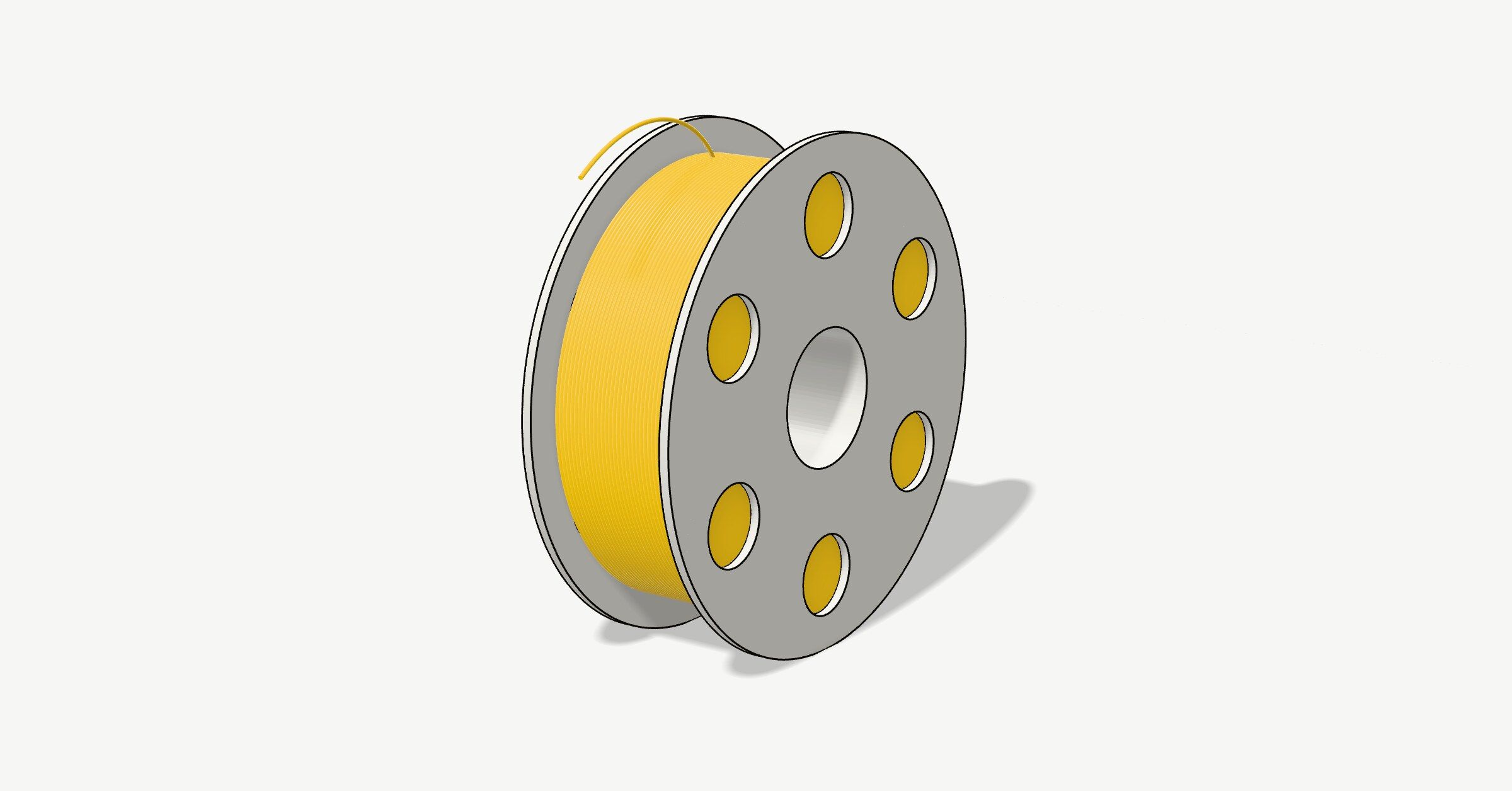
Most 3D prints are PLA, and for models and prototypes it’s the right choice. The other five are for parts PLA can’t handle, and each one fixes a different weakness. To compare them fairly, every number below comes from one maker’s data sheets, where all six were printed and tested the same way.
What's on the list
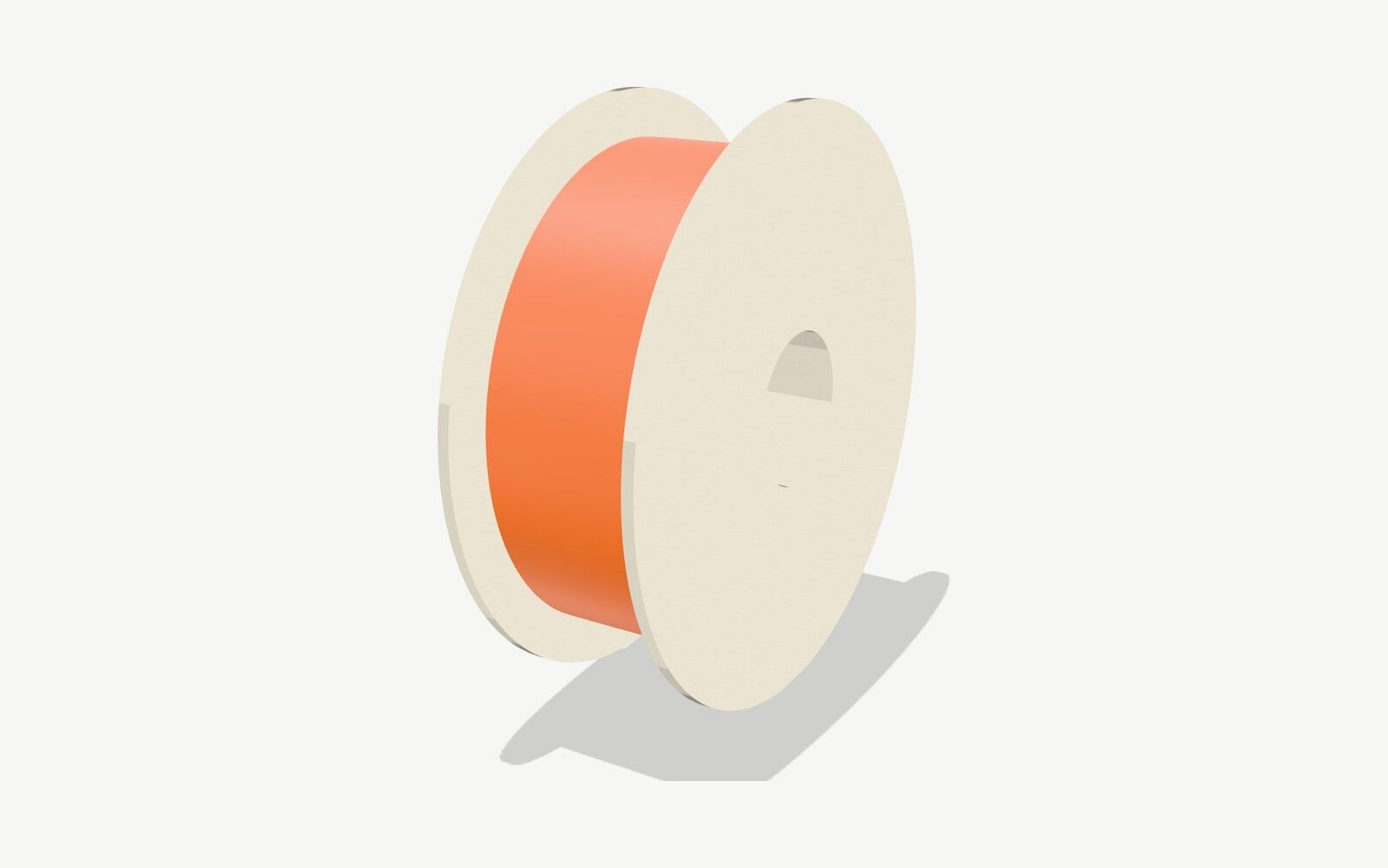
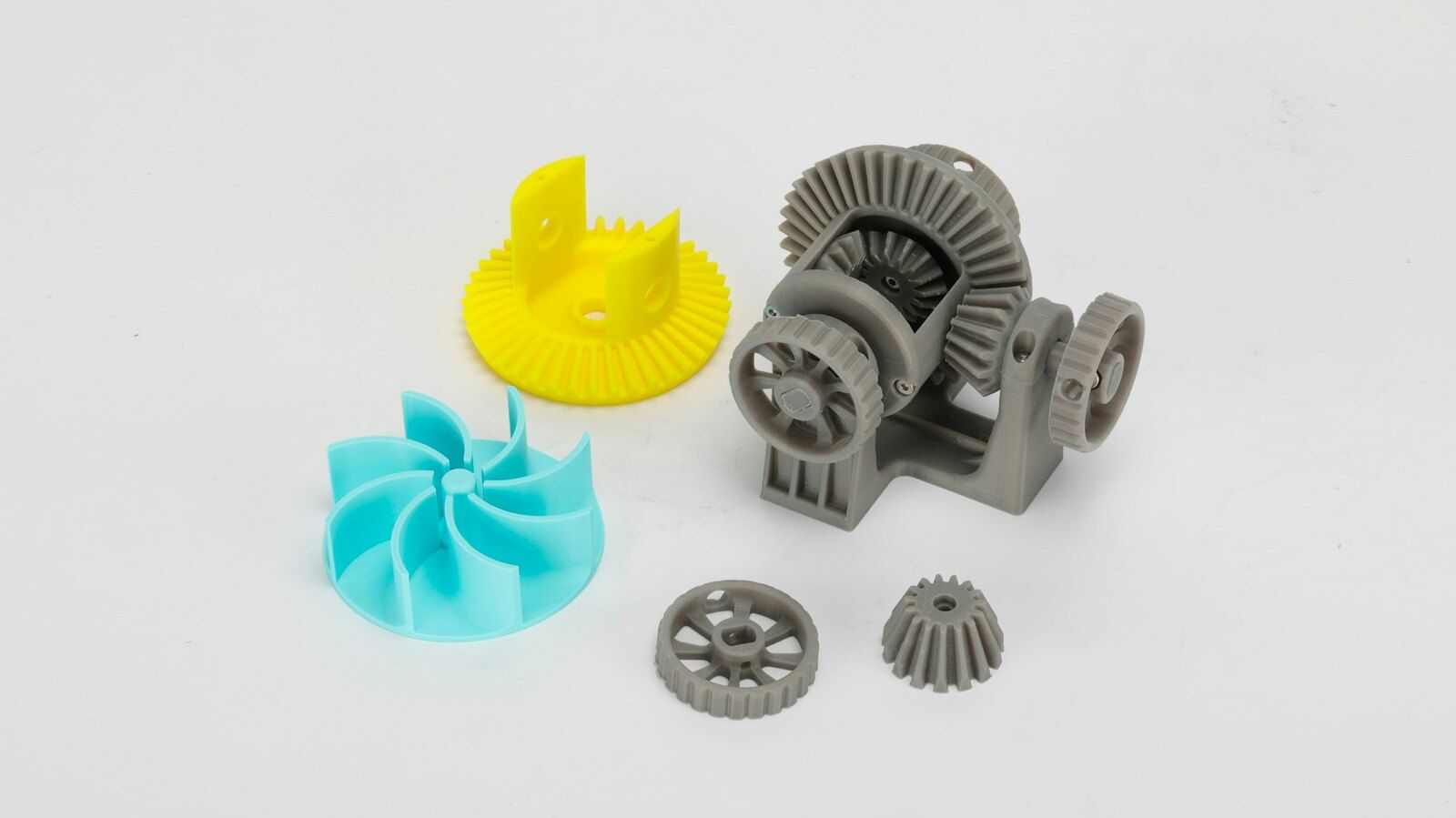
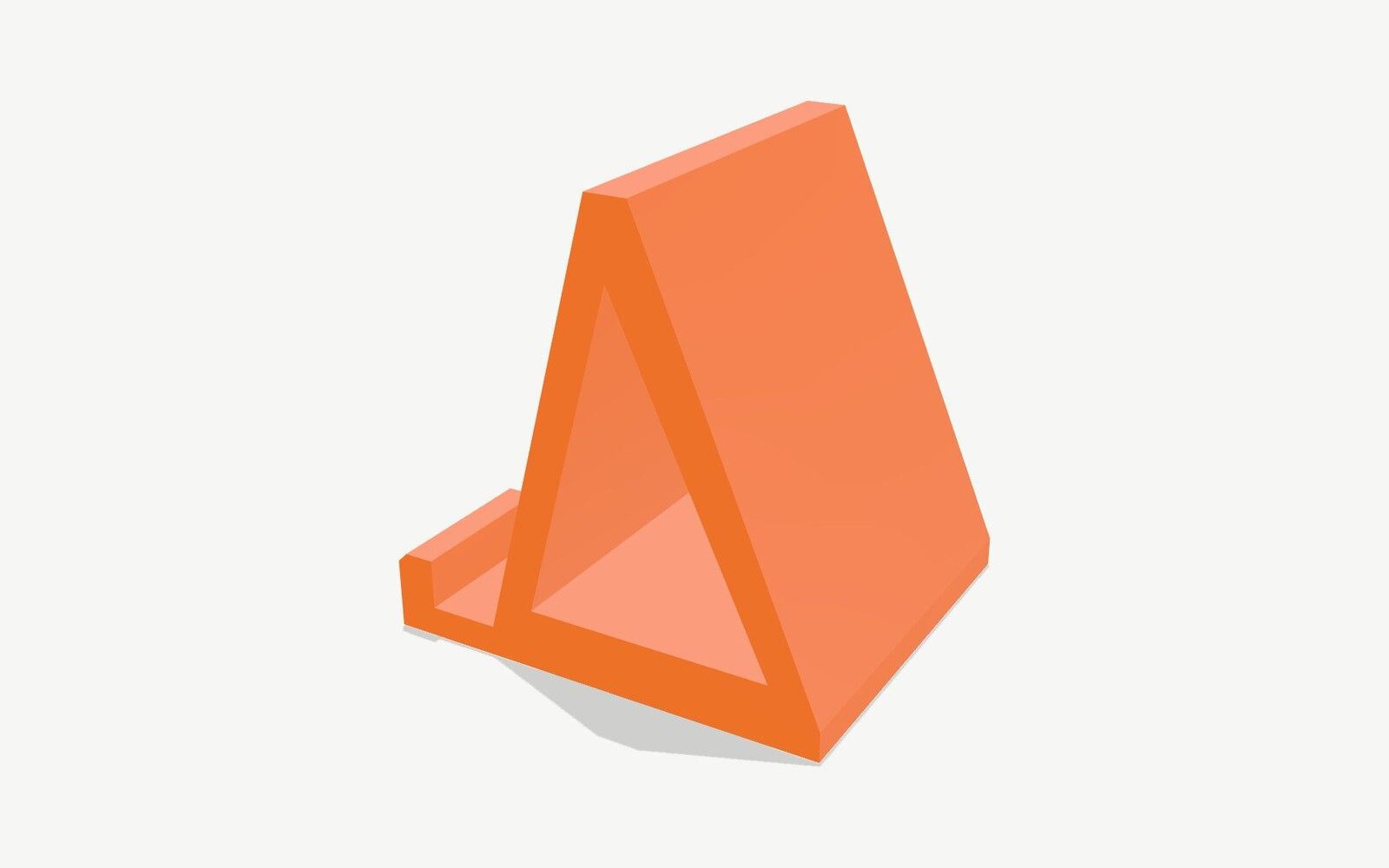
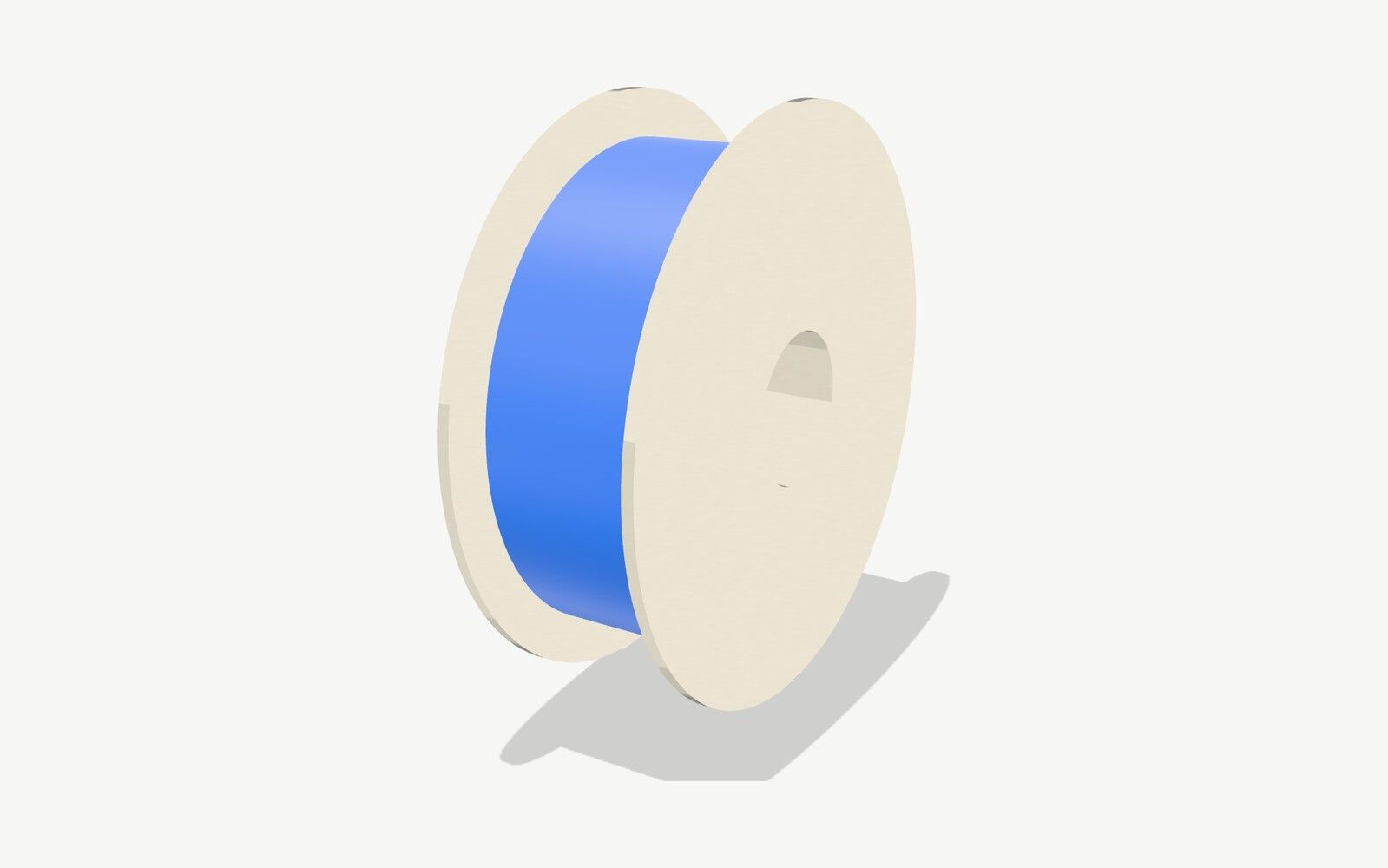
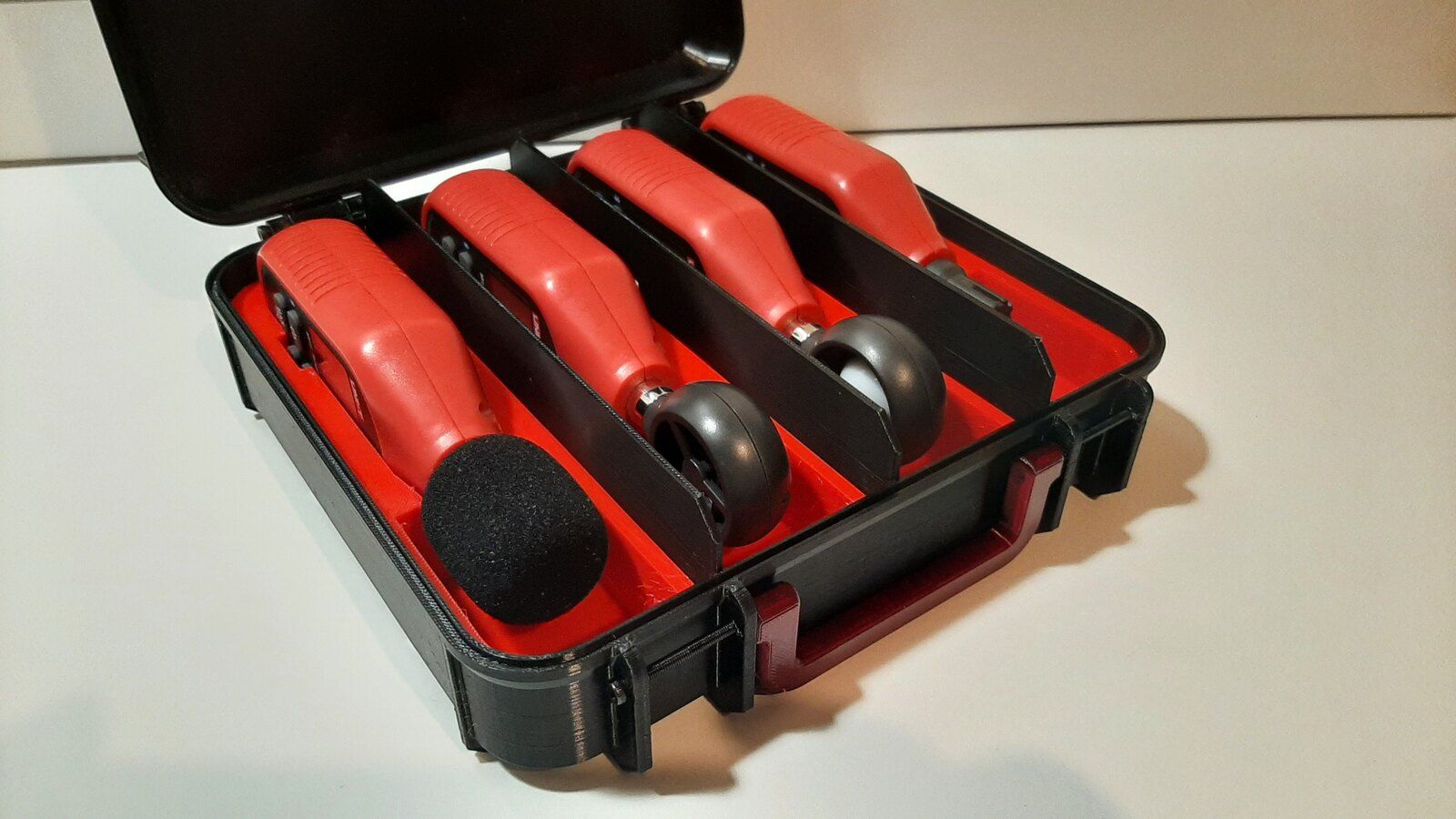
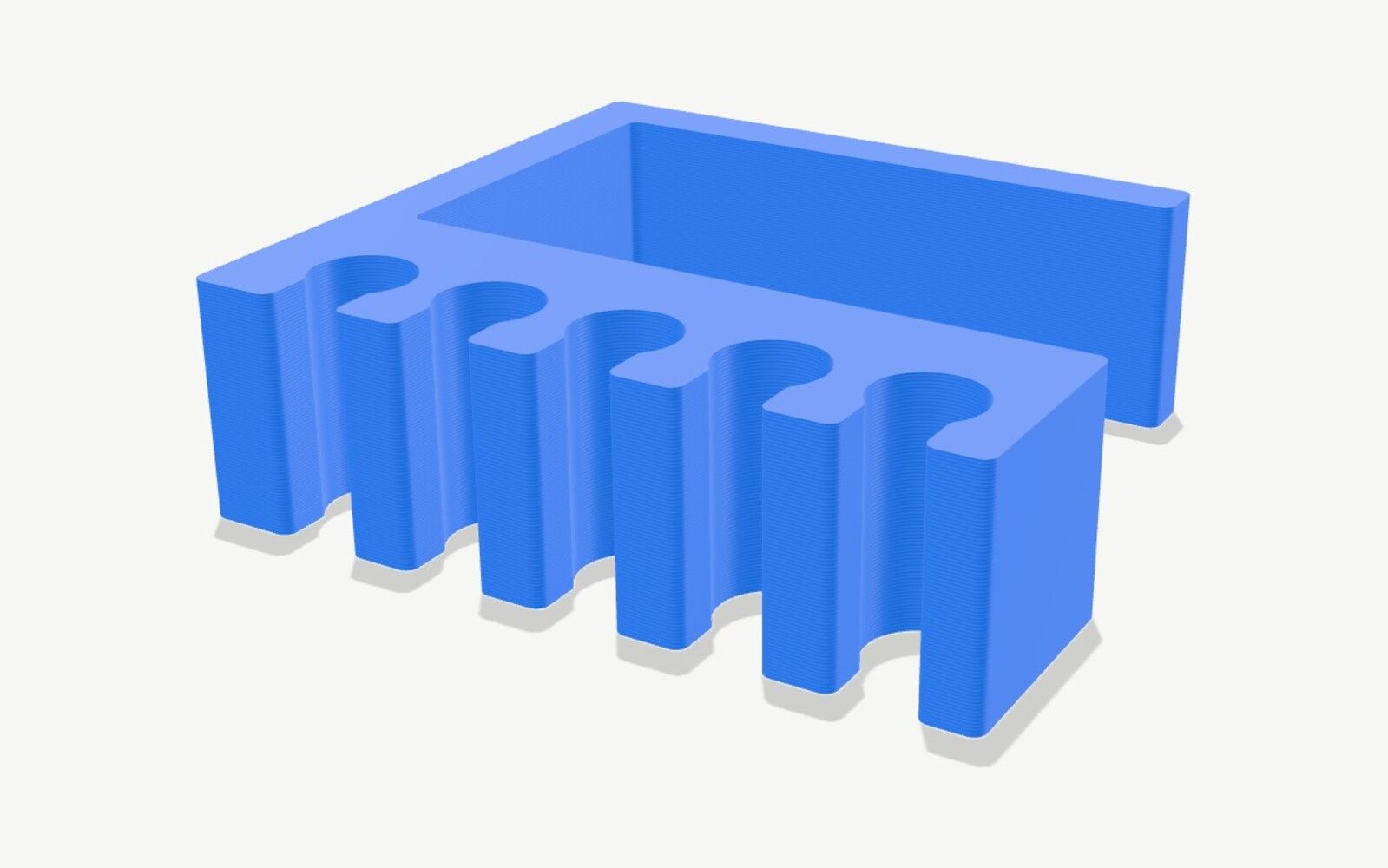
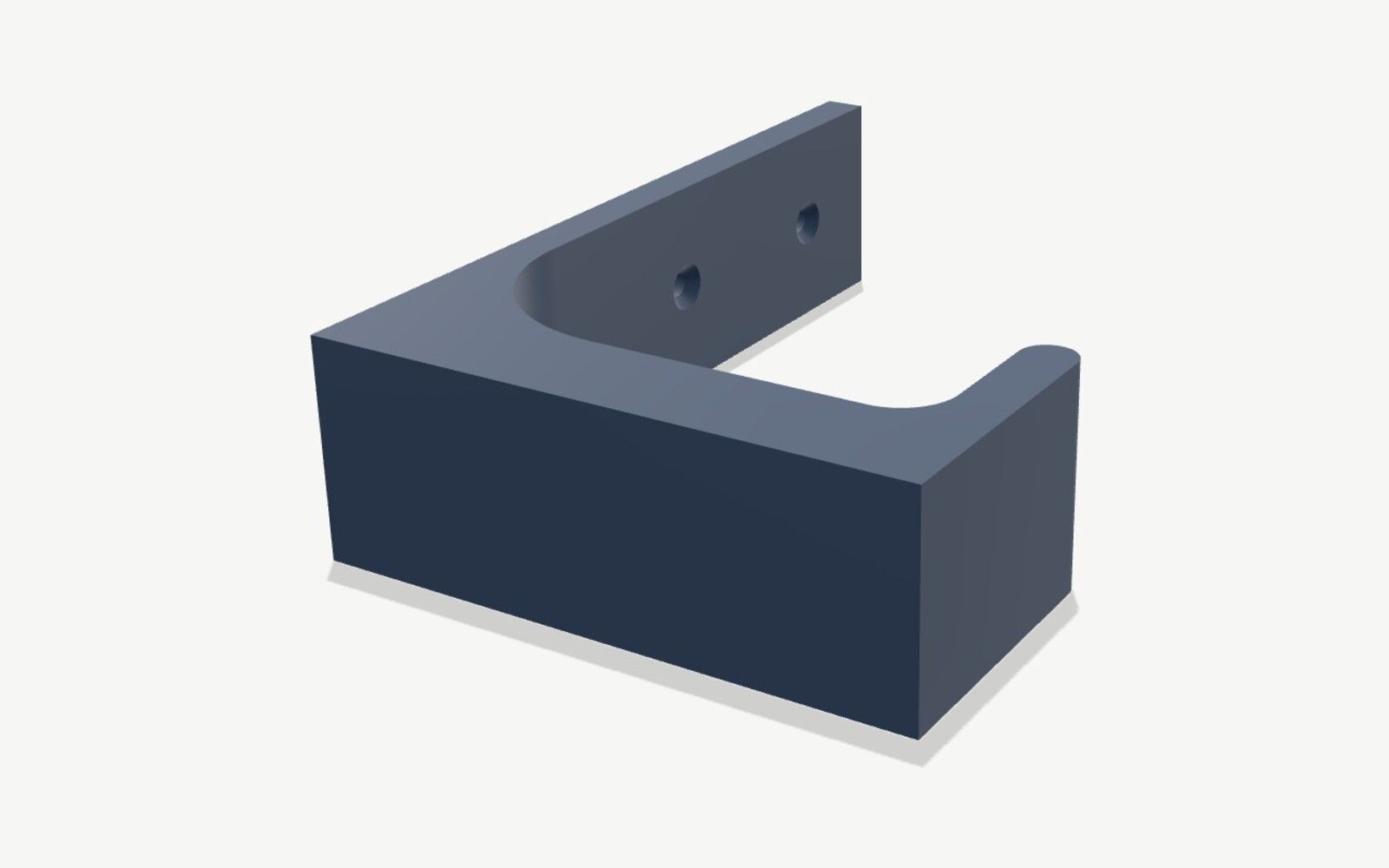
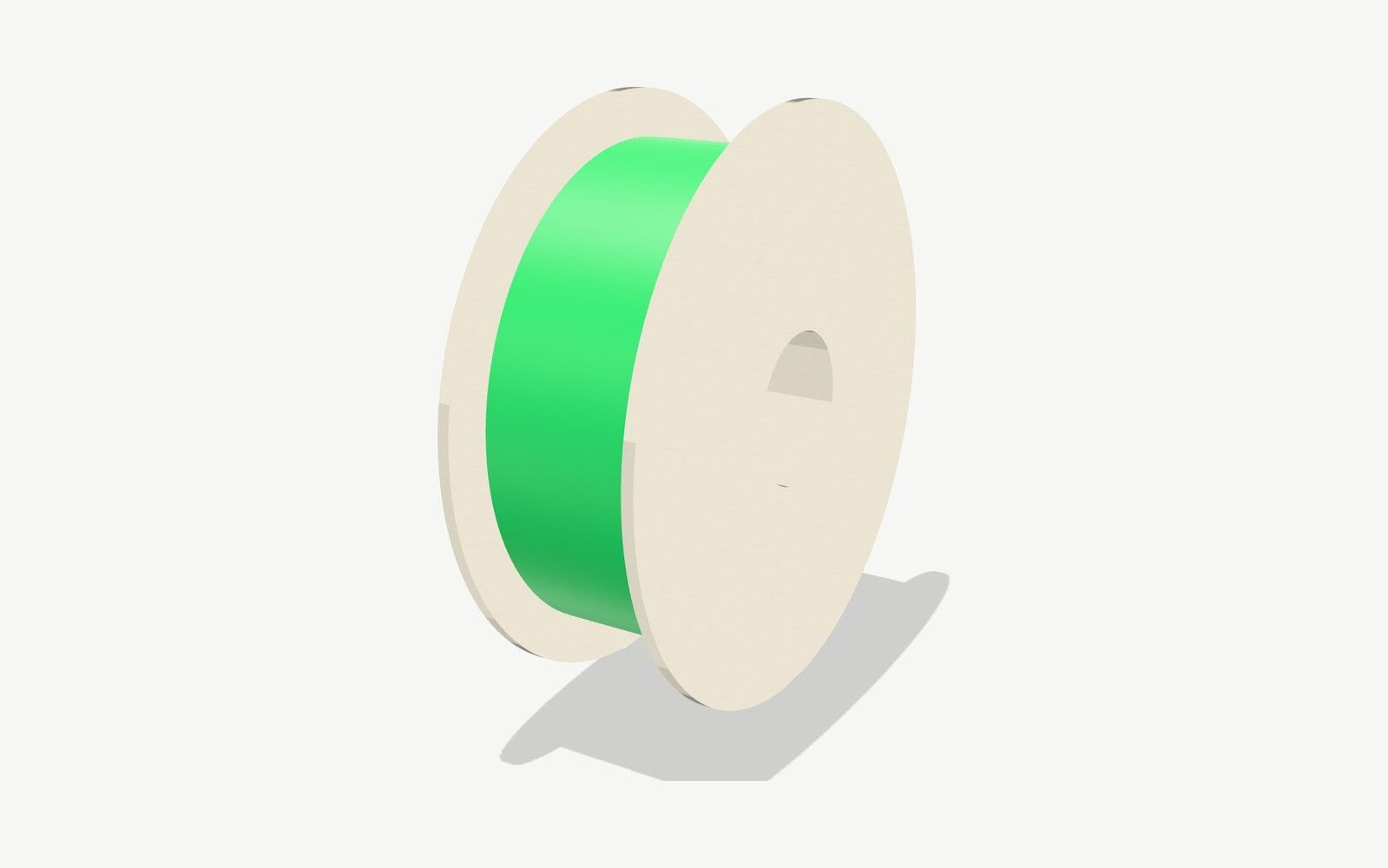
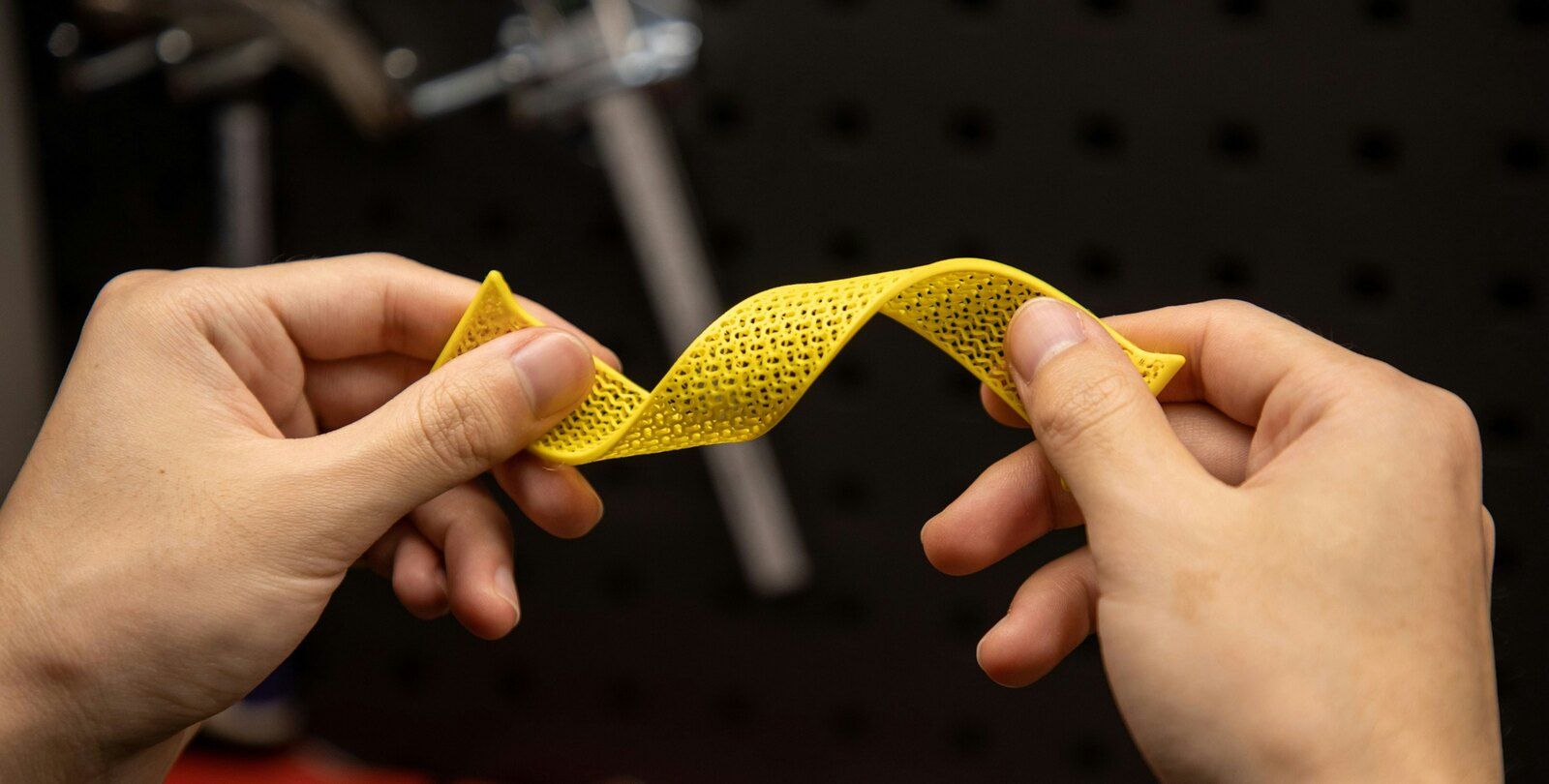
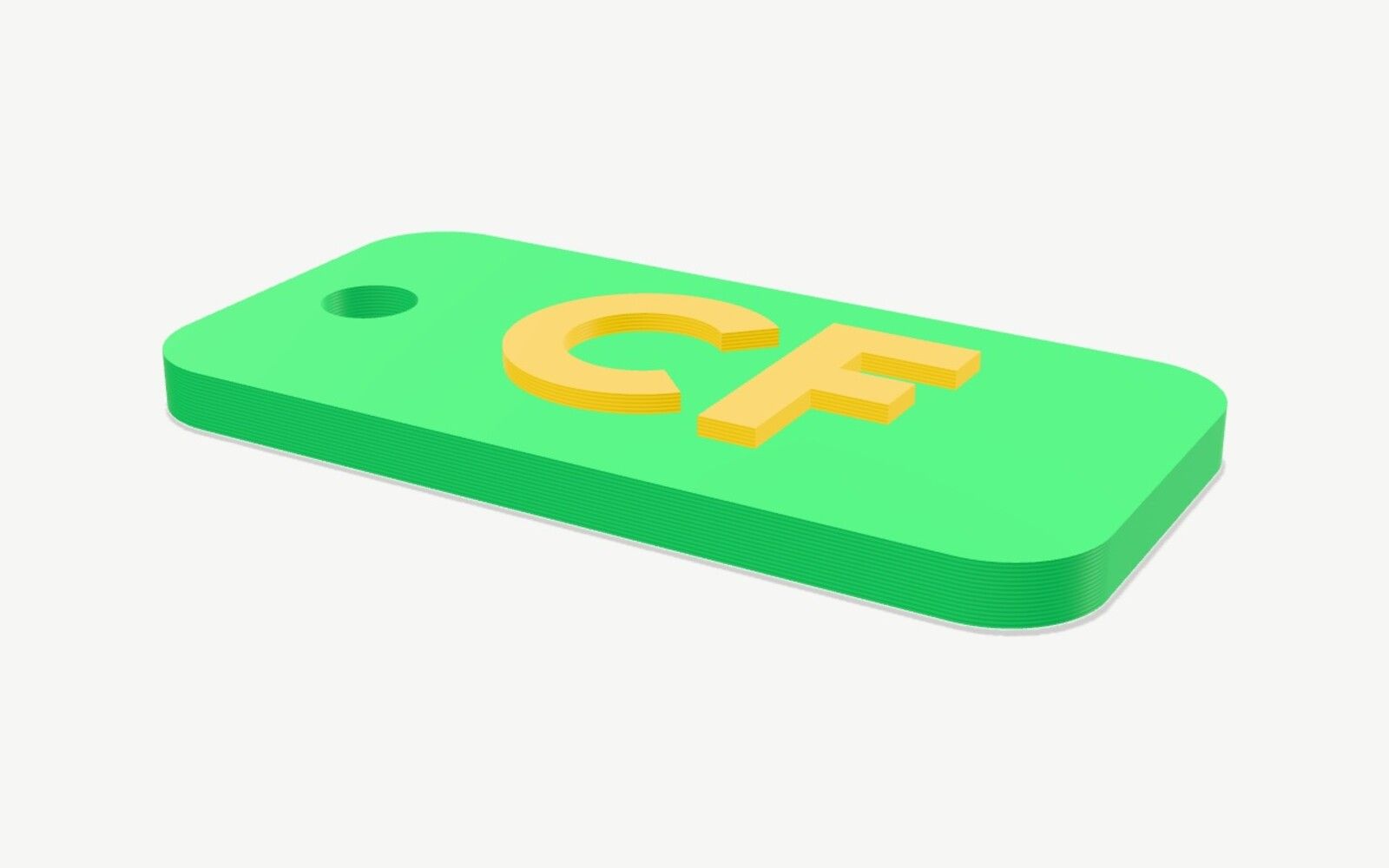
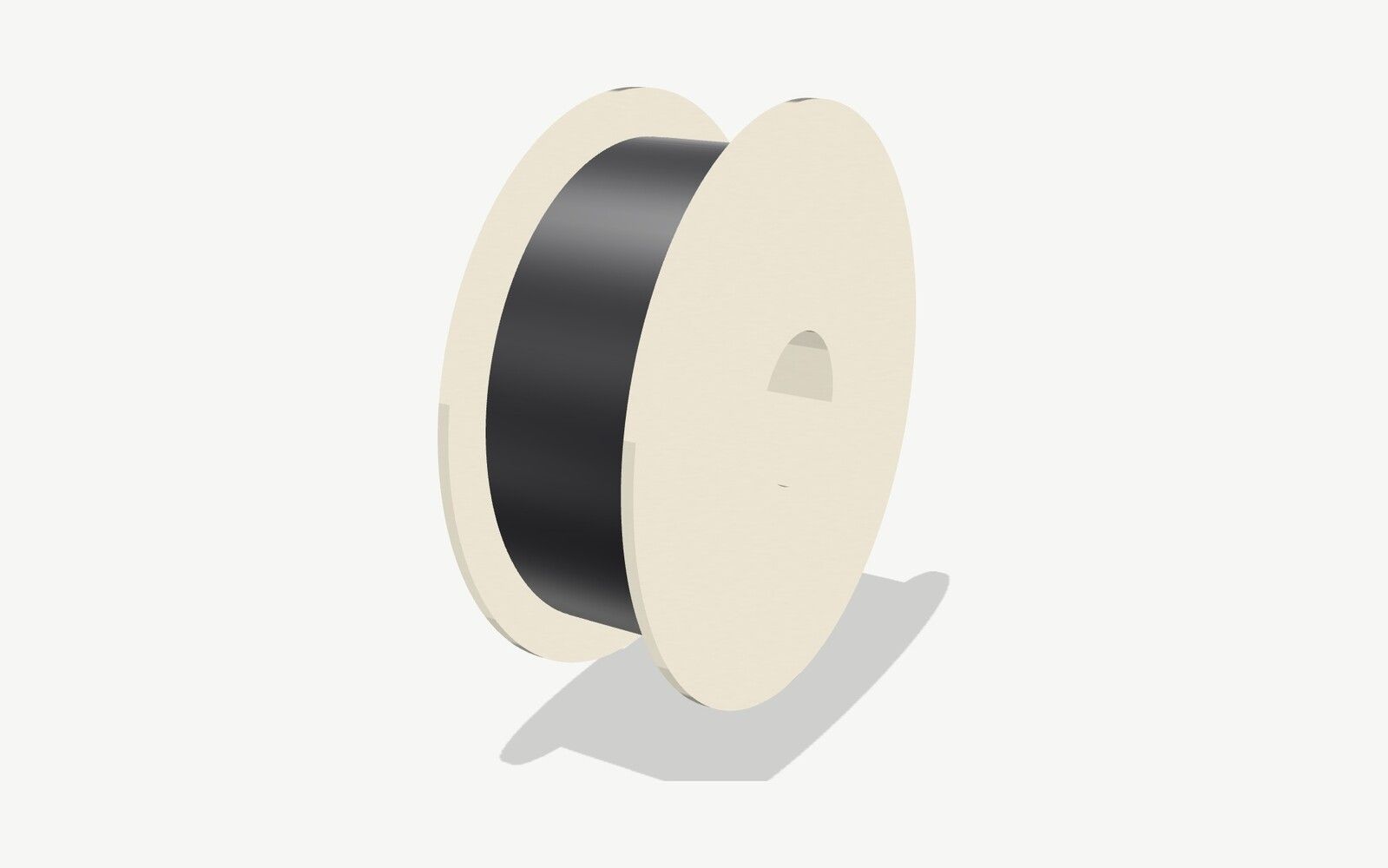
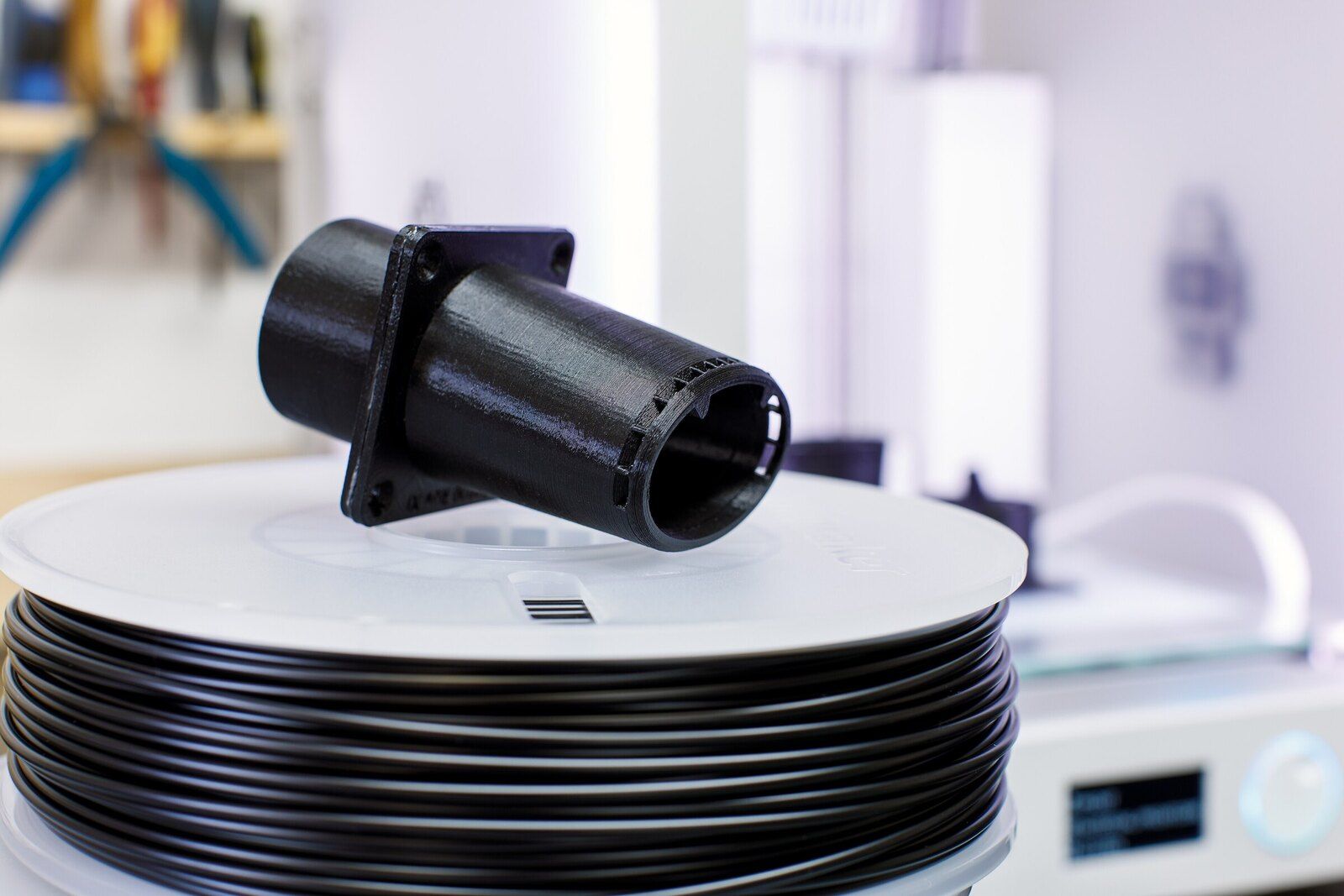
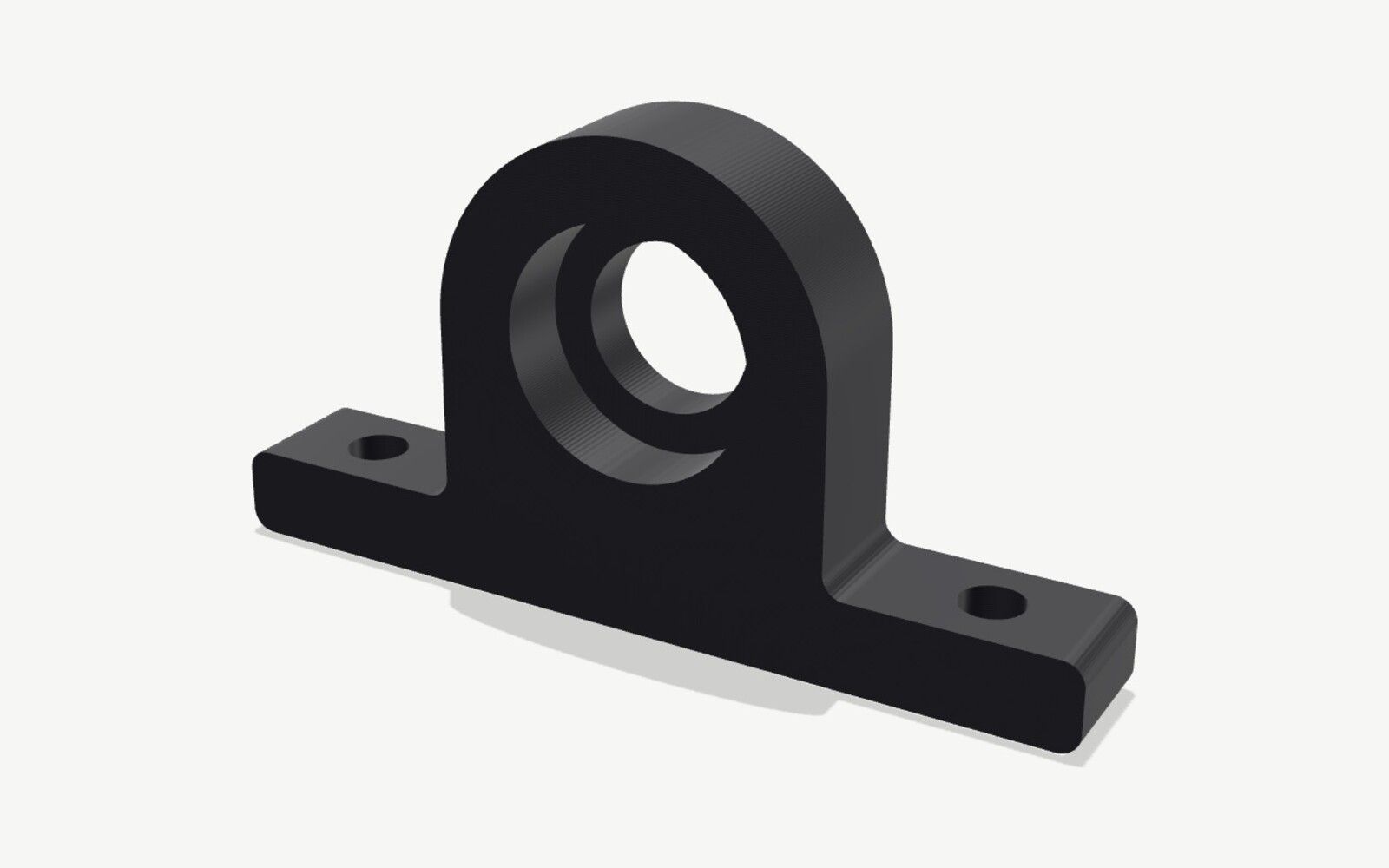
The six filament types a home printer can print, from PLA to nylon. Each card has the spool rendered in CadFlow, a photo of a real part made from it, a part made in CadFlow in that filament, its numbers drawn against the other five, the print settings, the price, two pros and two cons.
Where the numbers come from
Polymaker's technical data sheets for six of its filaments, read on 29 October 2026. We checked them against Prusament's sheets: strength agrees within a few MPa, and heat does too except for ASA, which Prusament puts at 93 °C.
Prices
Polymaker's own US store on 29 October 2026, for most colours, before tax. TPU and nylon only come in 0.75 kg spools.
| If you’re printing | Use |
|---|---|
| Models, prototypes and your first prints | PLA |
| Brackets, clips and parts that get handled | PETG |
| Parts that get warm or get knocked about | ABS, with an enclosure |
| Anything that lives outside | ASA, with an enclosure |
| Parts that bend: cases, feet, seals | TPU |
| Gears, hinges and parts under real load | Nylon |
PLA
Polylactic acid
$19.99 for 1 kg
- Nozzle
- 190 to 230 °C
- Bed
- 25 to 60 °C
- Enclosure
- Not needed
- Softens at
- 60 °C
- Strength, printed flat
- 52.3 MPa
- Drying
- Only if it's damp: 55 °C for 6 h
The one most people start with and keep using. It prints on any printer, cold bed or warm, with little warping, and it's the stiffest of the six, so it's right for models, prototypes and anything that stays indoors.
- Prints on any printer, with no enclosure and little warping
- The stiffest of the six, and stronger than PETG when printed flat
- Softens at 60 °C, the lowest of the six apart from TPU
- Brittle: it cracks rather than bends, and takes a knock worst of the six
Data: Polymaker PolyLite PLA · Picture: made in CadFlow
Data: Polymaker PolyLite PLA · Photo: Snapmaker, Unsplash License
Data: Polymaker PolyLite PLA · Picture: made in CadFlow
PETG
Polyethylene terephthalate glycol
$19.99 for 1 kg
- Nozzle
- 240 to 260 °C
- Bed
- 60 to 70 °C
- Enclosure
- Not needed
- Softens at
- 69 °C
- Strength, printed flat
- 47.96 MPa
- Drying
- 60 °C for 6 h
The step up from PLA for parts that get used: brackets, clips, holders and anything that takes a little heat or water. It costs the same as PLA, needs no enclosure, and its layers hold together better than any of the others.
- Almost as strong between layers as along them, the best of the six
- No enclosure needed and little smell, at the same price as PLA
- Takes up water from the air, and damp PETG strings
- Softens at 69 °C, only a little above PLA
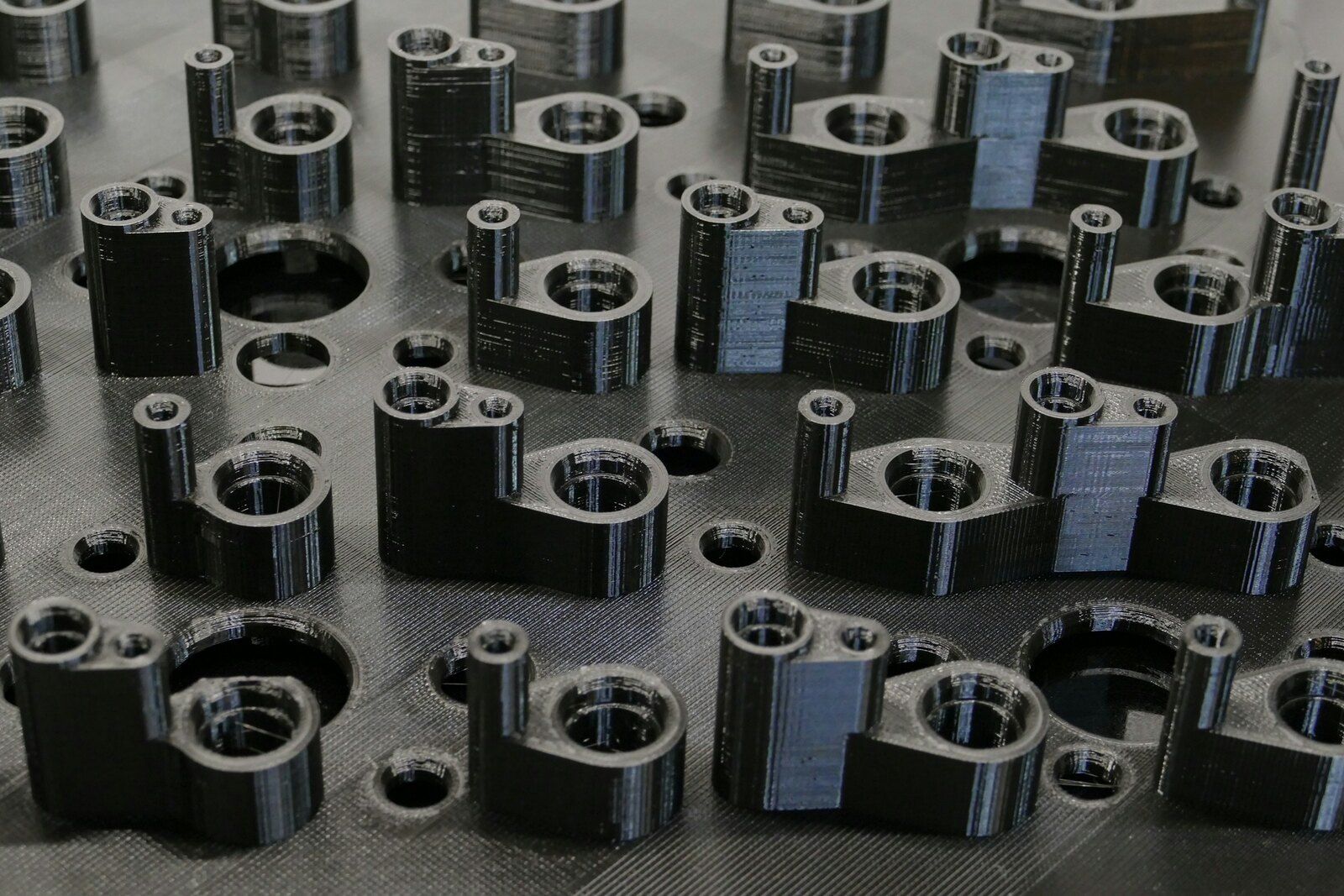
Data: Polymaker PETG · Picture: made in CadFlow
Data: Polymaker PETG · Photo: J. C. Barros, CC BY 4.0
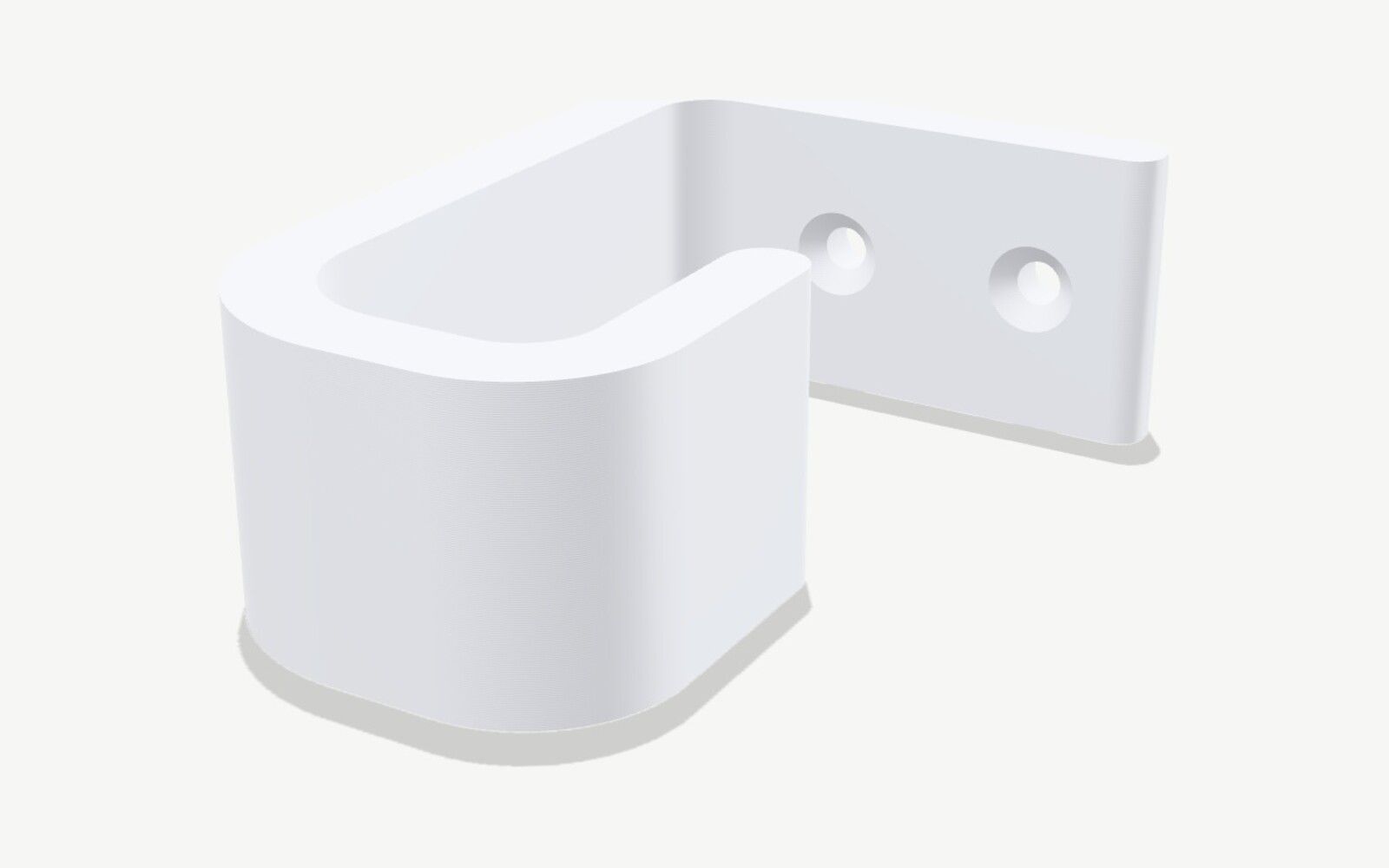
Data: Polymaker PETG · Picture: made in CadFlow
ABS
Acrylonitrile butadiene styrene
$19.99 for 1 kg
- Nozzle
- 245 to 265 °C
- Bed
- 90 to 100 °C
- Enclosure
- Needed
- Softens at
- 100 °C
- Strength, printed flat
- 33.4 MPa
- Drying
- 70 °C for 6 h
The plastic LEGO bricks are made of, for parts that get warm or get knocked about. It needs an enclosure: Polymaker says an open printer is fine only for parts up to about the size of a fist.
- Softens at 100 °C, 40 degrees above PLA
- Tough: it takes a notched knock five times better than PLA
- Needs an enclosure, or bigger parts warp
- Smells while printing, so Polymaker advises good ventilation
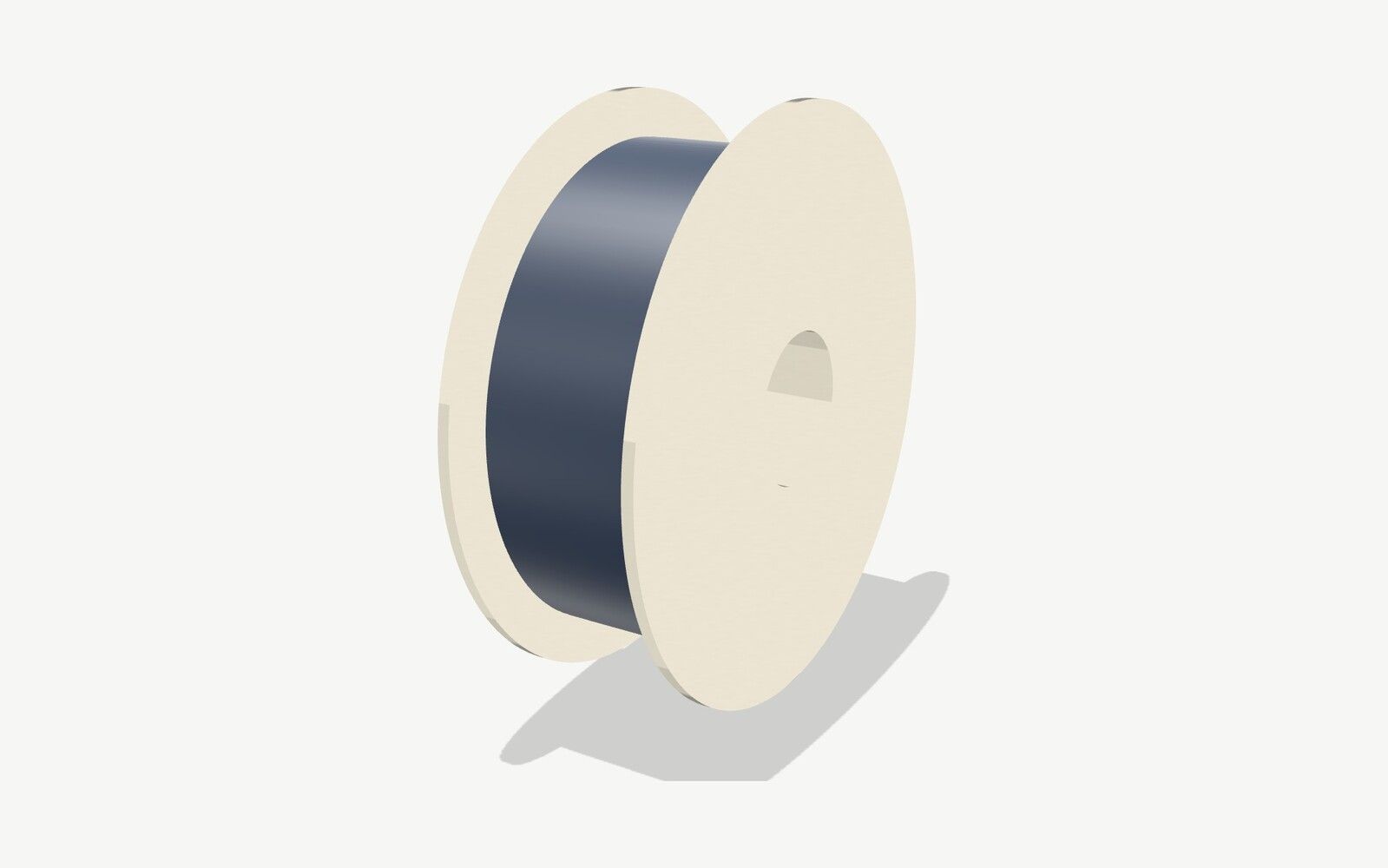
Data: Polymaker PolyLite ABS · Picture: made in CadFlow
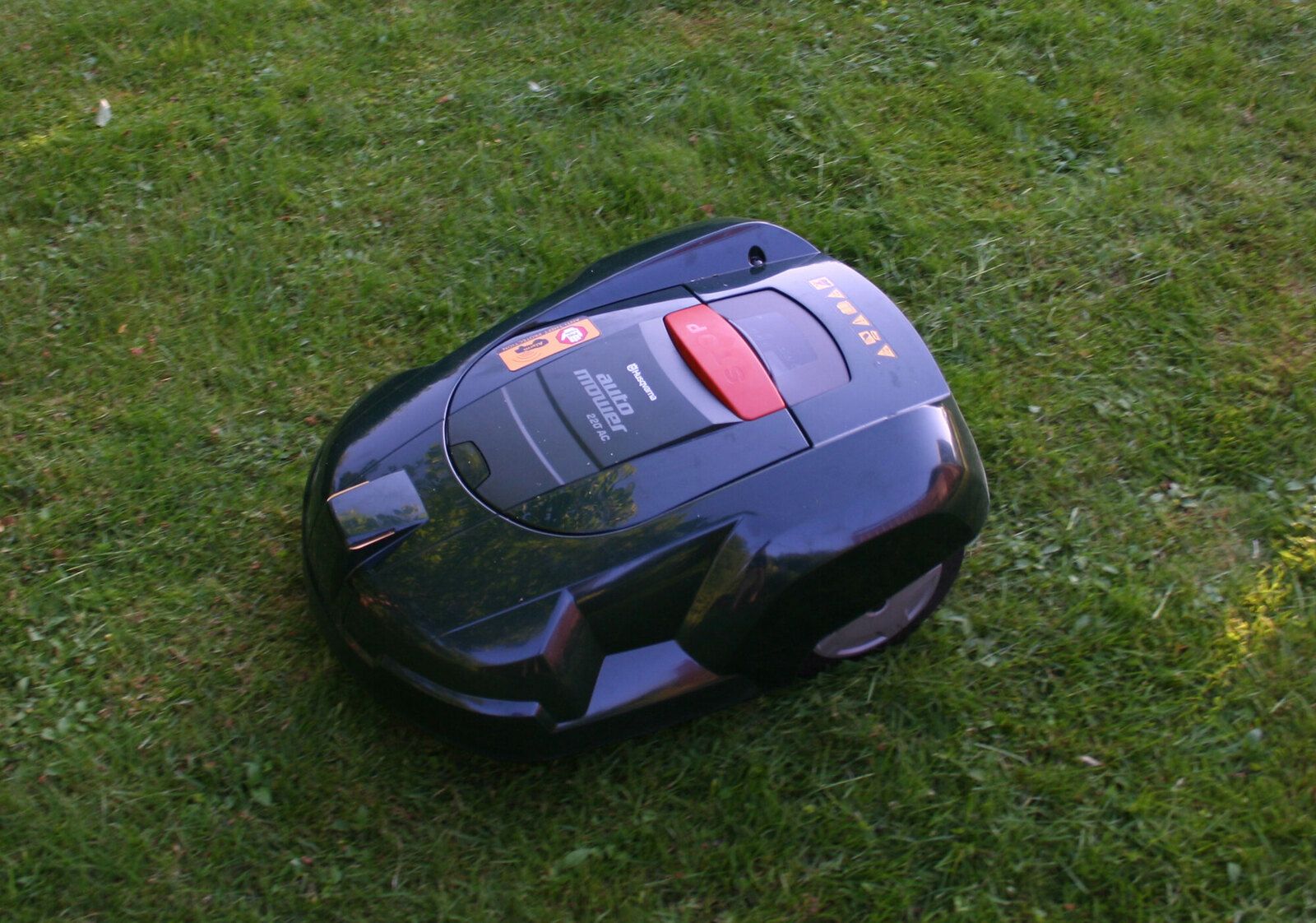
Data: Polymaker PolyLite ABS · Photo: eMotion Tech, Unsplash License
Data: Polymaker PolyLite ABS · Picture: made in CadFlow
ASA
Acrylonitrile styrene acrylate
$26.99 for 1 kg
- Nozzle
- 230 to 260 °C
- Bed
- 75 to 95 °C
- Enclosure
- Needed
- Softens at
- 103 °C
- Strength, printed flat
- 43.8 MPa
- Drying
- 70 °C for 7 h
ABS made to stay outside. It prints the same way, needs the same enclosure and takes the same heat, but it doesn't fade or go brittle in the sun, so it's the one for garden parts and anything that lives on a balcony.
- Made for the sun: Polymaker measured almost no colour change after two years outdoors
- Softens at 103 °C, and it's stronger than ABS
- Needs an enclosure and ventilation, like ABS
- Costs about a third more than PLA, PETG or ABS
Data: Polymaker ASA · Picture: made in CadFlow
Data: Polymaker ASA · Photo: Denoir, Public domain
Data: Polymaker ASA · Picture: made in CadFlow
TPU
Thermoplastic polyurethane, shore 95A
$29.99 for 0.75 kg
- Nozzle
- 210 to 230 °C
- Bed
- 25 to 60 °C
- Enclosure
- Not needed
- Softens at
- Not given, it's soft
- Strength, printed flat
- Stretches 6.5 times its length
- Drying
- 70 °C for 8 h
Rubbery filament for parts that bend and spring back: phone cases, feet, seals, bumpers and grips. This one is 95A, firm for a TPU, and it prints at PLA temperatures with no enclosure.
- Stretches to more than six times its length before it breaks
- Prints at PLA temperatures, on a cold bed, with no enclosure
- Needs a direct drive extruder; Polymaker advises against Bowden printers
- Takes up more water than anything here but nylon, so dry it first
Data: Polymaker PolyFlex TPU95 · Picture: made in CadFlow
Data: Polymaker PolyFlex TPU95 · Photo: Snapmaker, Unsplash License
Data: Polymaker PolyFlex TPU95 · Picture: made in CadFlow
Nylon
Polyamide (PA), here a nylon 6 and 6/66 copolymer
$49.99 for 0.75 kg
- Nozzle
- 250 to 270 °C
- Bed
- 25 to 50 °C
- Enclosure
- Needed
- Softens at
- 111 °C
- Strength, printed flat
- 78 MPa
- Drying
- 100 °C for 8 h, then print from a dryer
The strongest of the six and the one that takes the most heat, for gears, hinges and parts under real load. The catch is water: nylon soaks it up from the air, so it has to be dried and printed straight from a dryer, and a part that has taken up water is less than half as strong.
- The strongest of the six: 78 MPa printed flat, half again as much as PLA
- Softens at 111 °C once annealed, the most heat of the six
- Takes up water fast, so it needs drying and printing straight from a dryer
- The most expensive: $49.99 for a 0.75 kg spool
Data: Polymaker PolyMide CoPA · Picture: made in CadFlow
Data: Polymaker PolyMide CoPA · Photo: Svitlana Lozova, CC BY-SA 4.0
Data: Polymaker PolyMide CoPA · Picture: made in CadFlow
To see what one print costs in any of them, use our 3D print cost calculator.
Which ones take heat
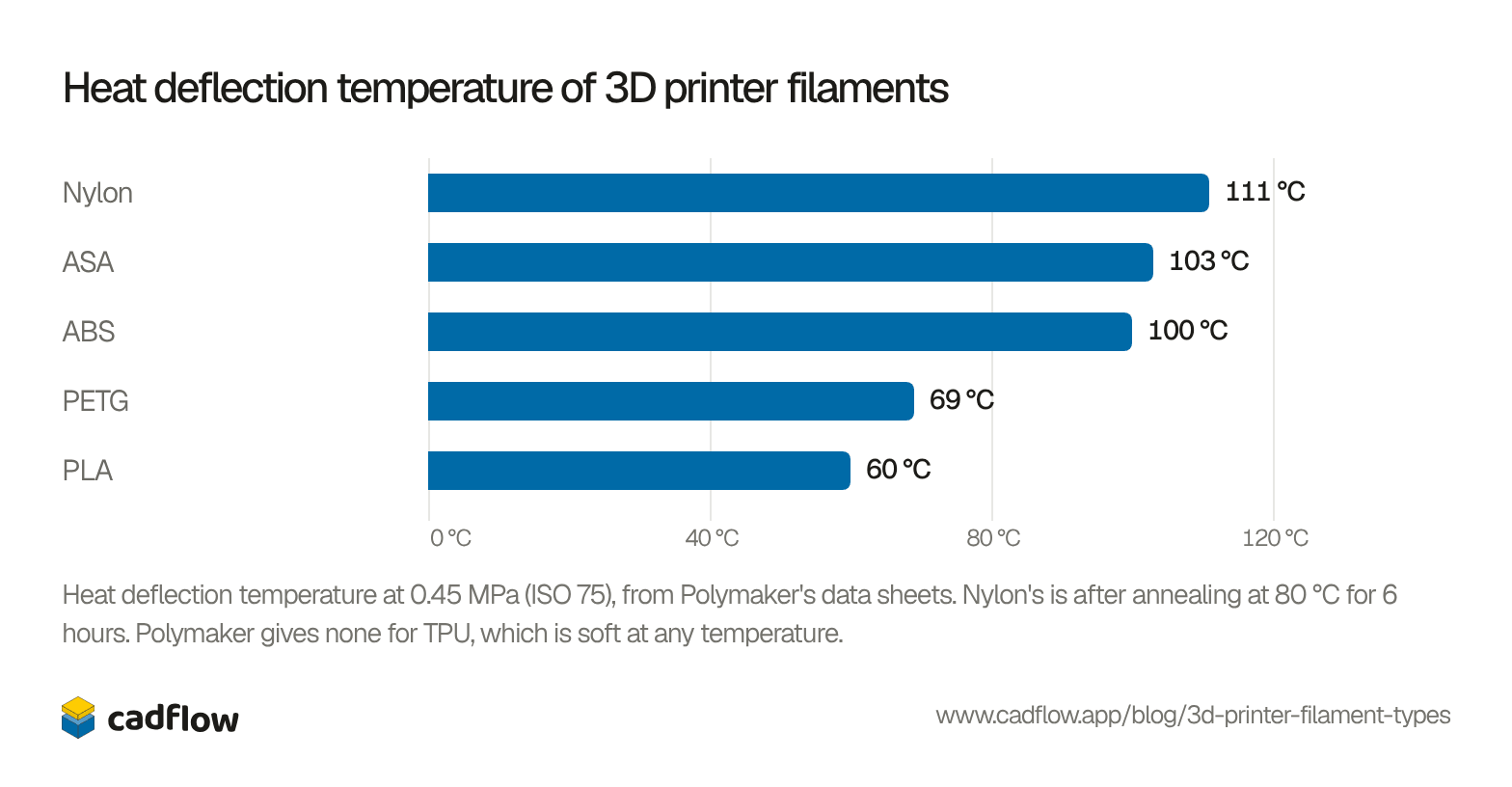
The heat deflection temperature is where a test bar under a light load (0.45 MPa) starts to bend. It’s the number to look at when a part will get warm. PLA gives up at 60 °C and PETG at 69 °C, while ABS and ASA hold until about 100 °C.
Show as a table
| Filament | Bends at |
|---|---|
| Nylon | 111 °C |
| ASA | 103 °C |
| ABS | 100 °C |
| PETG | 69 °C |
| PLA | 60 °C |
Strength depends on which way you print
A print is weakest between its layers, because each layer only fuses to the one below it. Polymaker tests every material both ways, printed flat so the pull runs along the layers and printed upright so it pulls them apart. PLA loses about a quarter of its strength across the layers and nylon about 40 %, while PETG keeps 95 % of it.
So a hook printed standing up, with the load pulling its layers apart, can snap where the same hook printed lying down would hold. Turn a part so its load runs along the layers, and if it can’t, PETG is the filament that minds least.
Printed flat, pulled along the layersPrinted upright, pulled across them
Show as a table
| Filament | Tensile strength |
|---|---|
| Nylon, flat | 78 MPa |
| Nylon, upright | 45.8 MPa |
| PLA, flat | 52.3 MPa |
| PLA, upright | 40.5 MPa |
| PETG, flat | 48 MPa |
| PETG, upright | 45.7 MPa |
| ASA, flat | 43.8 MPa |
| ASA, upright | 32 MPa |
| ABS, flat | 33.4 MPa |
| ABS, upright | 29.7 MPa |
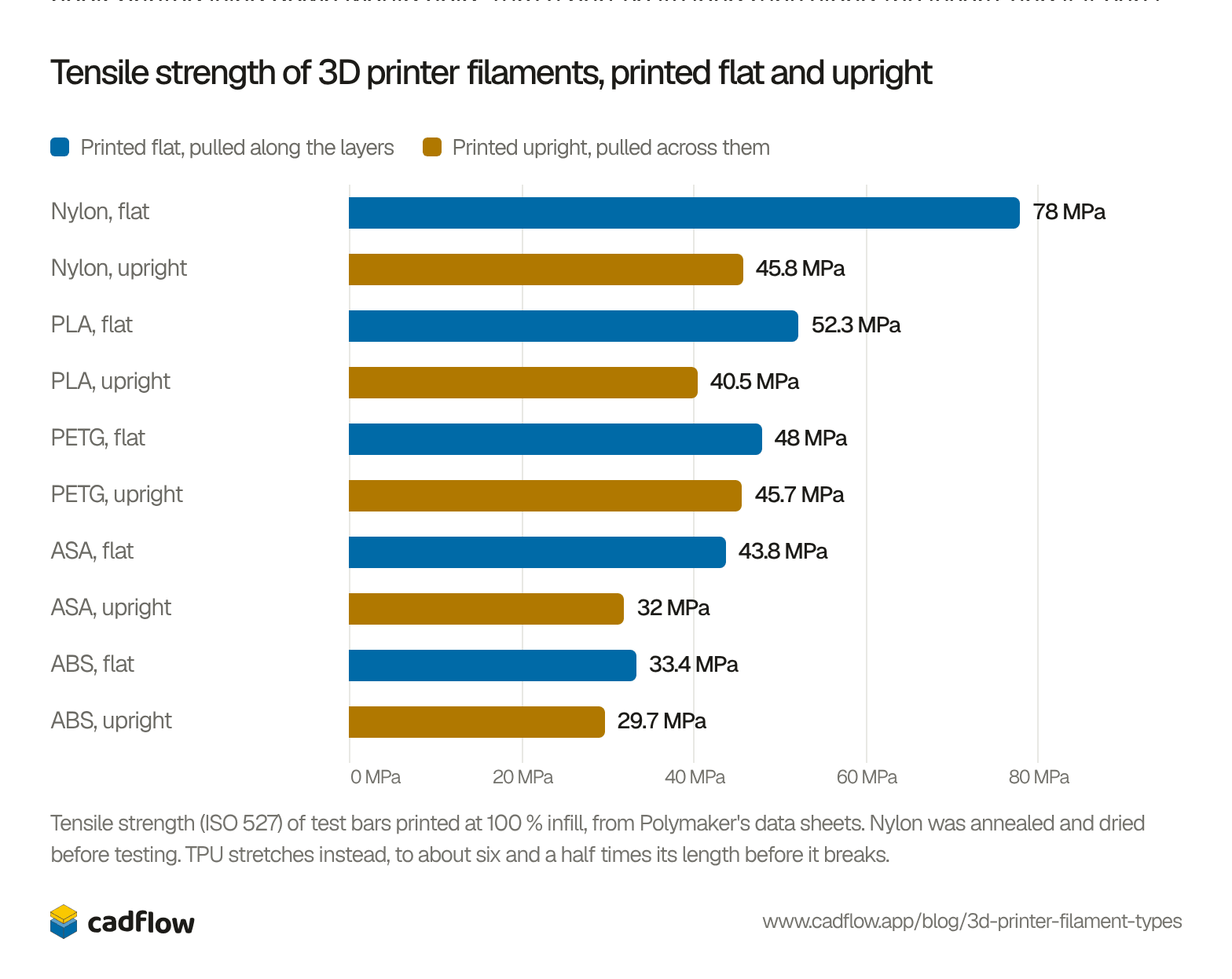
Strength in a pull isn’t everything. ABS is the weakest of the five in this chart, but in the notched impact test it takes a knock five times better than PLA, and better than nylon too while the nylon is dry.
Water, and why nylon needs a dryer
Every filament takes up some water from the air, and damp filament prints worse: Polymaker says damp PETG strings, for example. Nylon takes up far more than the rest, which is why its sheet says to dry it at 100 °C for 8 hours and print it straight from a dryer. Keep any spool sealed in a bag with desiccant untill you print with it.
Show as a table
| Filament | Water taken up |
|---|---|
| Nylon | 2.82 % |
| TPU | 0.82 % |
| PLA | 0.51 % |
| PETG | 0.51 % |
| ASA | 0.40 % |
| ABS | 0.35 % |
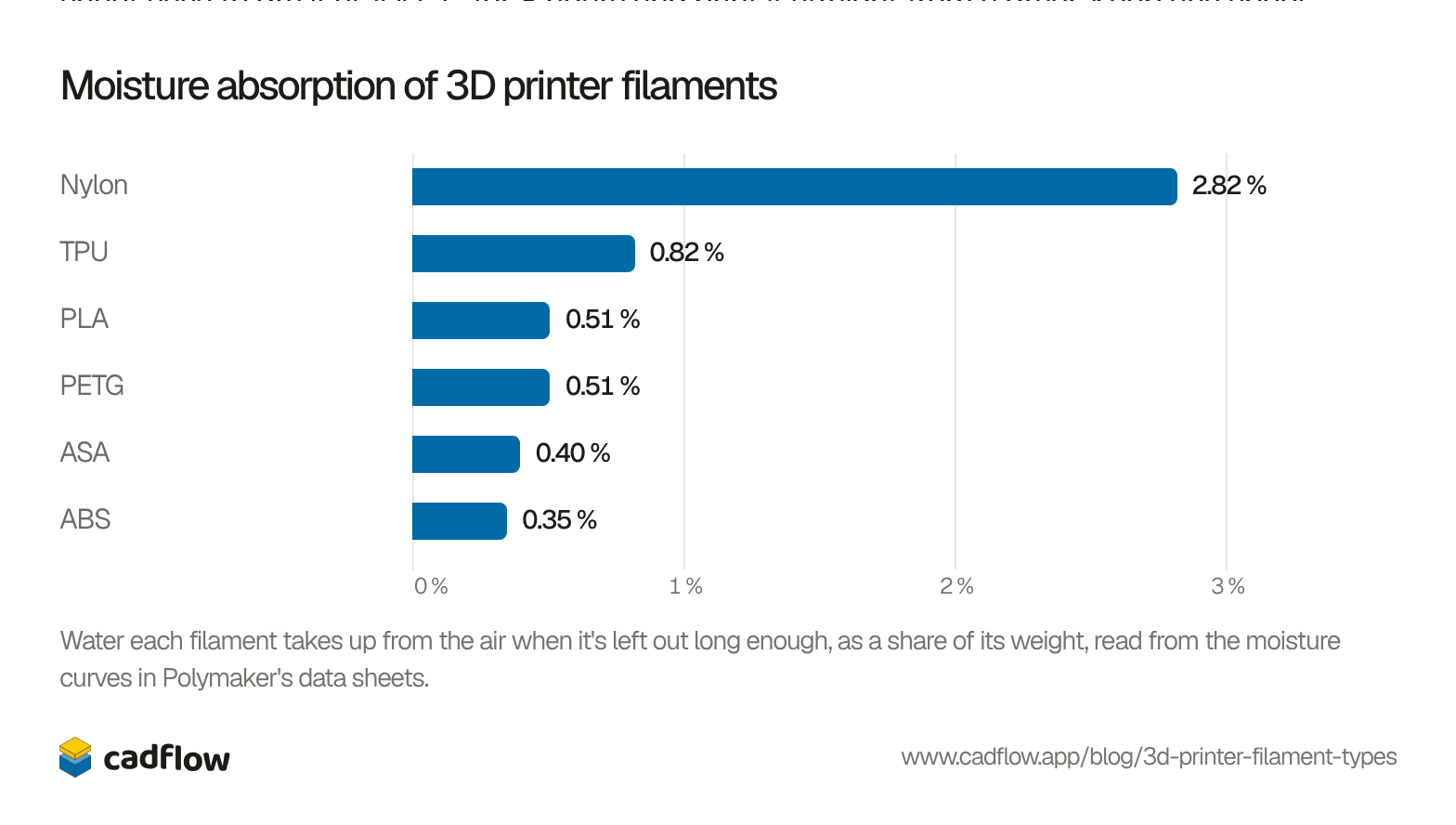


Water changes the part as well as the print. Polymaker soaked nylon test bars in 60 °C water for 48 hours: they held 34 MPa instead of 78, but took a notched knock four times better. A nylon part that lives in a damp place ends up weaker but tougher than its dry numbers.
Not on the list
Many brands sell blends called PLA+, silk PLA or matte PLA. They print like PLA, but what’s in them and how strong they are varies by brand, so check that brand’s sheet. Polycarbonate (PC) and the carbon or glass filled versions of PLA, PETG and nylon are for stiffer or hotter parts. The filled ones wear out brass nozzles, so they need a hardened steel nozzle.
Parts like these in CadFlow
We make CadFlow, a 3D program for things you build, which plays the build back as a step-by-step video that anyone can follow. It isn’t public yet. If you'd like to try it, join the waitlist.
Questions people ask
Which filament is the strongest?
Of these six, nylon: 78 MPa printed flat in Polymaker's tests, against 52 for PLA and 48 for PETG. Printed upright, nylon and PETG are almost level, at 45.8 and 45.7 MPa.
Is PLA food safe?
Polymaker doesn't say so: the shop pages for its PLA, PETG, ABS and ASA say "we do not have any data whether this material is food safe". Prusament says PLA itself is food safe, but advises against eating or drinking from prints again and again, because bacteria can build up in small cracks in a printed surface. A food-safe coating helps with that.
Do I need an enclosure?
Not for PLA, PETG or TPU. ABS and ASA need one to keep bigger parts from warping. Polymaker's nylon data sheet asks for one too, although its shop page says it isn't needed.
What's the difference between ABS and ASA?
They print almost the same way and take about the same heat, 100 and 103 °C. ASA is made to stand up to sunlight: Polymaker measured almost no colour change after two years outdoors. ABS is a little cheaper and takes a knock better, while ASA is stronger in a pull.
Why does my filament string?
Often because it's damp. Polymaker says wet PETG strings, and its data sheets give a drying temperature and time for each filament, from 55 °C for PLA to 100 °C for nylon.
Where do the numbers come from?
From Polymaker's data sheets for PolyLite PLA, Polymaker PETG, PolyLite ABS, Polymaker ASA, PolyFlex TPU95 and PolyMide CoPA, read on 29 October 2026, and its shop pages for prices and what it says each material is good at. We checked them against Prusament's sheets. Prusament measures stiffness a different way, so we don't compare stiffness here.
Free tools for this
- 3D print cost calculatorWhat a print costs in filament, electricity and wear, and what to charge for it.
- Pulley system calculatorAdd pulleys, pull the rope, and see how much lighter the load gets and how much more rope you pull. Print the pulleys too.
- Gear generatorSpur gears with true involute teeth, and the gear they drive. See them turn, then download STL, SVG or DXF.
History of this post
- Published
Read next
The 7 most visited sites for free STL files in 2027
3D printer nozzle sizes and materials compared: which nozzle for what
Types of 3D printers: FDM, resin, SLS, MJF, PolyJet and metal compared


This blog is by the team making CadFlow, where you build your project in 3D and show how it goes together.
See how CadFlow works